Garlic: history, characteristics and use at La Corte Segreta
Fresh garlic at La Corte Segreta: finely sliced, combined with extra virgin olive oil and carefully measured, particularly on the Marinara.

A garlic field in northern France, photographed in July. The leaves emerge above ground while the bulbs develop below the surface. Source and credit: JustineToul · 2 July 2023 · CC BY-SA 4.0.
At La Corte Segreta, the Marinara gives garlic a particularly prominent role: it is one of this pizza’s main ingredients. We always use fresh garlic, finely sliced and combined with extra virgin olive oil.
Garlic and its oil are measured together
During preparation, the fine slices are covered with extra virgin olive oil. When topping the pizza, we add the garlic with its oil. The quantity follows the guidelines given during training.
When a pizza receives this garlic, we do not add any further olive oil after baking. The Marinara is the exception: our recipe calls for our Riviera Ligure DOP oil.
Before baking: protecting the garlic slices
Our garlic oil is extra virgin olive oil containing fine slices of fresh garlic. In our recipes, garlic is always added before baking. Adding raw garlic after baking is an exception, only at the customer’s request.
On the Marinara, the garlic and its oil are mixed with the tomato. The slices must remain covered with a thin layer of tomato: this protects them from direct exposure to heat and prevents them from burning.
On other pizzas that include it, the garlic can be placed among the ingredients at the point specified by the recipe. On the Cinque Stagioni, our variation on the Quattro Stagioni, it is added immediately after the mushrooms, before continuing with the toppings.
Respecting each pizza’s identity
Garlic accompanies certain recipes, such as the Zingara. We also prepare a spicy garlic oil using extra virgin olive oil as the base. These additions follow the pairings planned by the establishment: on the PeraCoscia, we preserve the recipe’s balance without adding garlic.
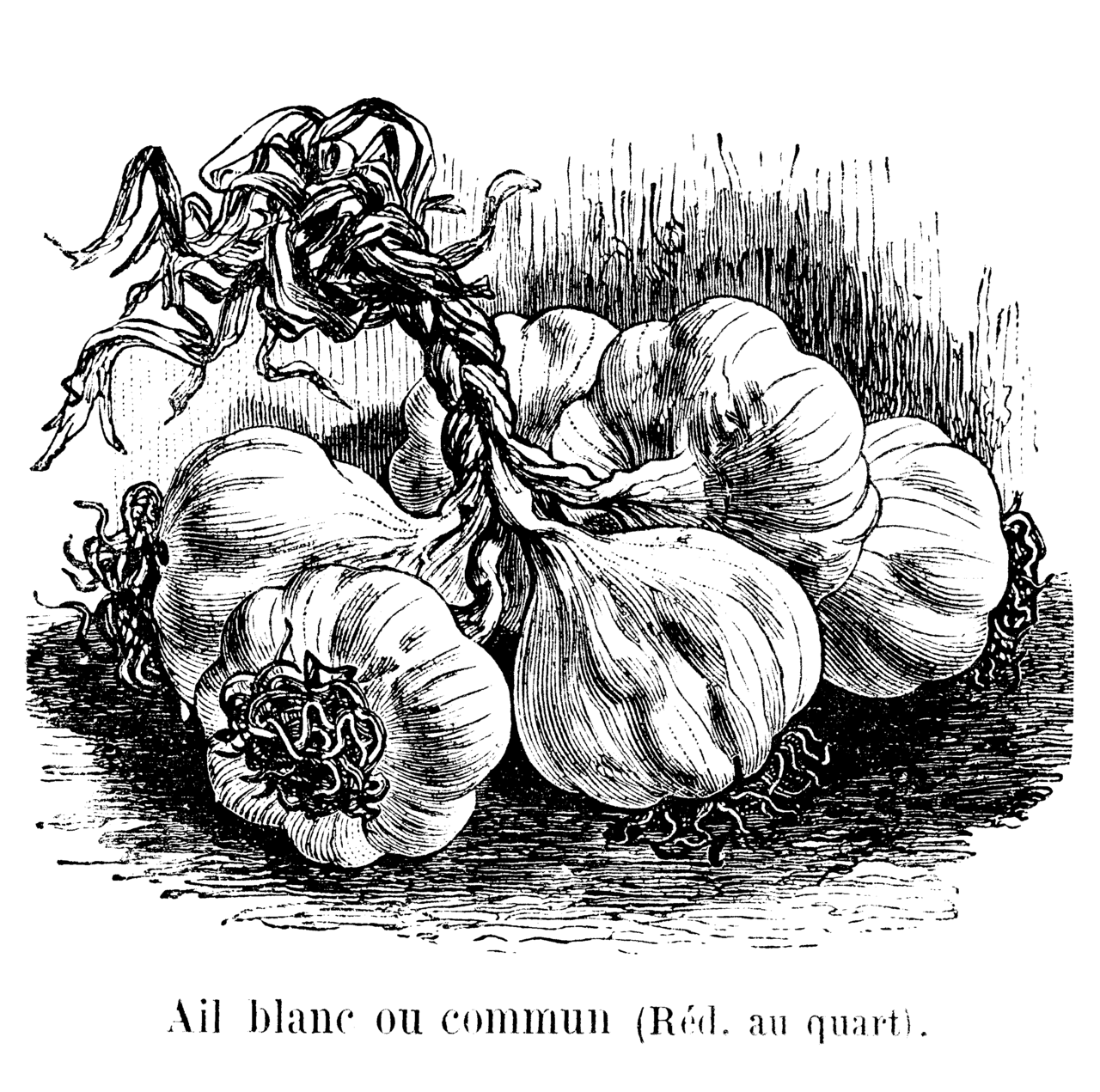
The “white or common garlic” illustrated in Vilmorin-Andrieux’s Les plantes potagères in 1904. This engraving shows several bulbs together, with their skins and roots: a historic view of a familiar ingredient. Source and credit: Unidentified illustrator; Vilmorin-Andrieux & Cie · 1904 · Historic public-domain work.
At La Corte Segreta
- For preparation and storage, follow the kitchen’s internal instructions.
Related archive entries
