Benito Nonino — whole grapes in the still
He lost his father during the war and devoted his working life to the stills at Percoto. Two experiments changed what could be distilled from grapes.
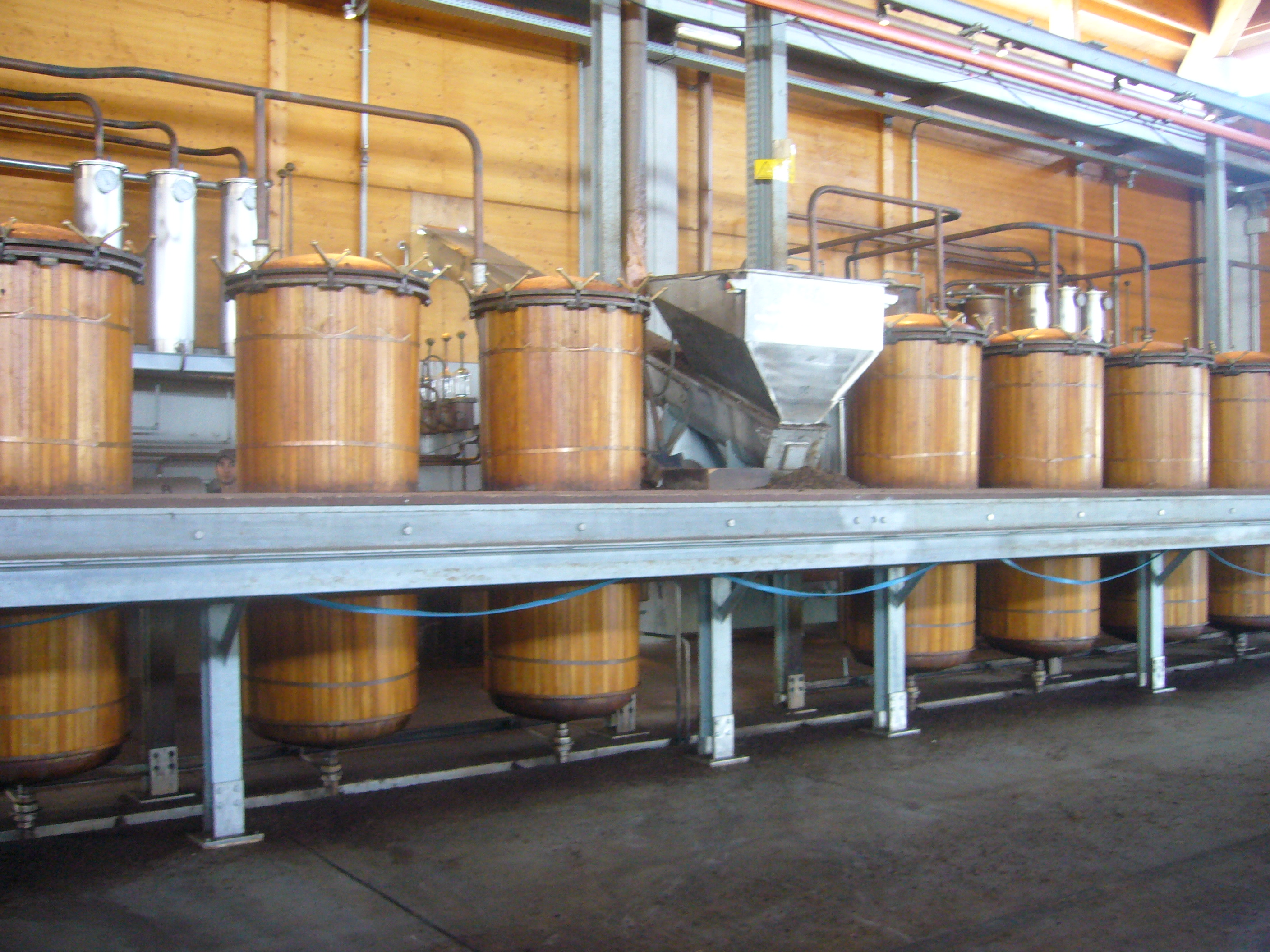
The Nonino distillery in Percoto, 25 September 2008.
Photograph by Pvt pauline, Wikimedia Commons, CC BY-SA 3.0. Original document · Licence
Learning the trade in a wartime distillery
Benito Nonino was born in Percoto on 6 February 1934. He was the fourth generation of a family of distillers that began with his great-grandfather Orazio’s travelling still. His father Antonio died during the Second World War. His mother Silvia took over the distillery. Benito grew up around the work she carried on, and in 1954 he suggested setting aside a cellar for ageing grappa.
Six stills in an old forge
In 1967, Benito and Giannola conduct an early experiment with pomace from selected wineries. The label of their Acquavite Optima lists the vintage, the weight of pomace distilled, the litres obtained and the bottle number. Anyone picking up the bottle could trace it back to a particular run. Six years before the single-variety Picolit, the Noninos were already telling the story of grappa through its raw material.
In 1973 Benito and Giannola ran the trial that kept Picolit pomace separate. It led to their single-variety Monovitigno grappa. Ten years later the old forge where Giannola’s father had made ploughs found a new use. Benito installed six stills he had designed for distilling individual grape varieties’ pomace and making fruit spirits. A batch still takes one charge at a time. The distiller sets aside the beginning and end of the run to keep its heart.
What if the juice went into the still too?
In 1984 Benito and Giannola turned to the whole grape. They used fermented juice along with the pulp and skins. The result was ÙE, the Friulian word for grape. The couple applied for authorisation, and Italy allowed the new spirit to be made on an experimental basis. The Official Gazette confirms that the initial permission, valid until the end of 1986, was later extended. On the La Corte Segreta menu, Fragolino, Malvasia and Schioppettino ÙE show what that change in raw material made possible.
Benito died in Percoto on 8 July 2024. Between the distillery and the neighbouring village of Persereano, he also left ten hectares of woodland that he had planted with native Friulian species.
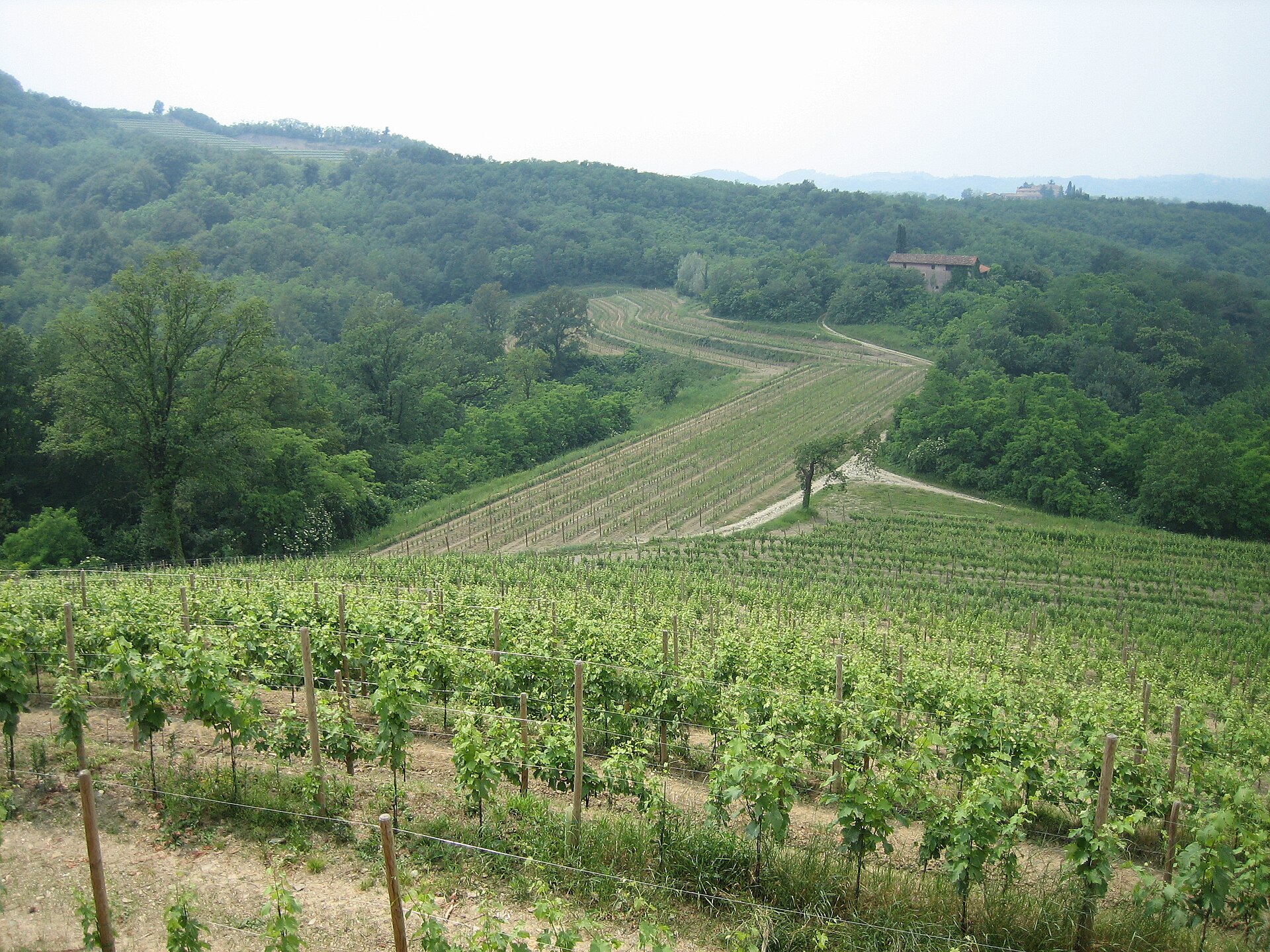
The vineyards at Rocca Bernarda in 2006. This Friulian estate has a long history of growing Picolit.
discosour · CC BY-SA 2.0 · Original document · Licence
Also in our archives
Nonino · grappa, ÙE and amaro →
Picolit · the grape behind the grappa →
ÙE · distilling the whole grape →
Giannola Nonino · Friuli’s forgotten grape varieties →
Silvia Milocco Nonino · a distillery in wartime →
Sources
Comitato Leonardo · a tribute to Benito Nonino
Nonino · the forge, the stills and the family’s history
Italian Official Gazette · experimental authorisation for grape spirit
Nonino · the woodland Benito planted