Grappa and honey: pomace meets the fragrance of flowers
Two agricultural ingredients, a blend and another way to extend the pleasure of the meal.
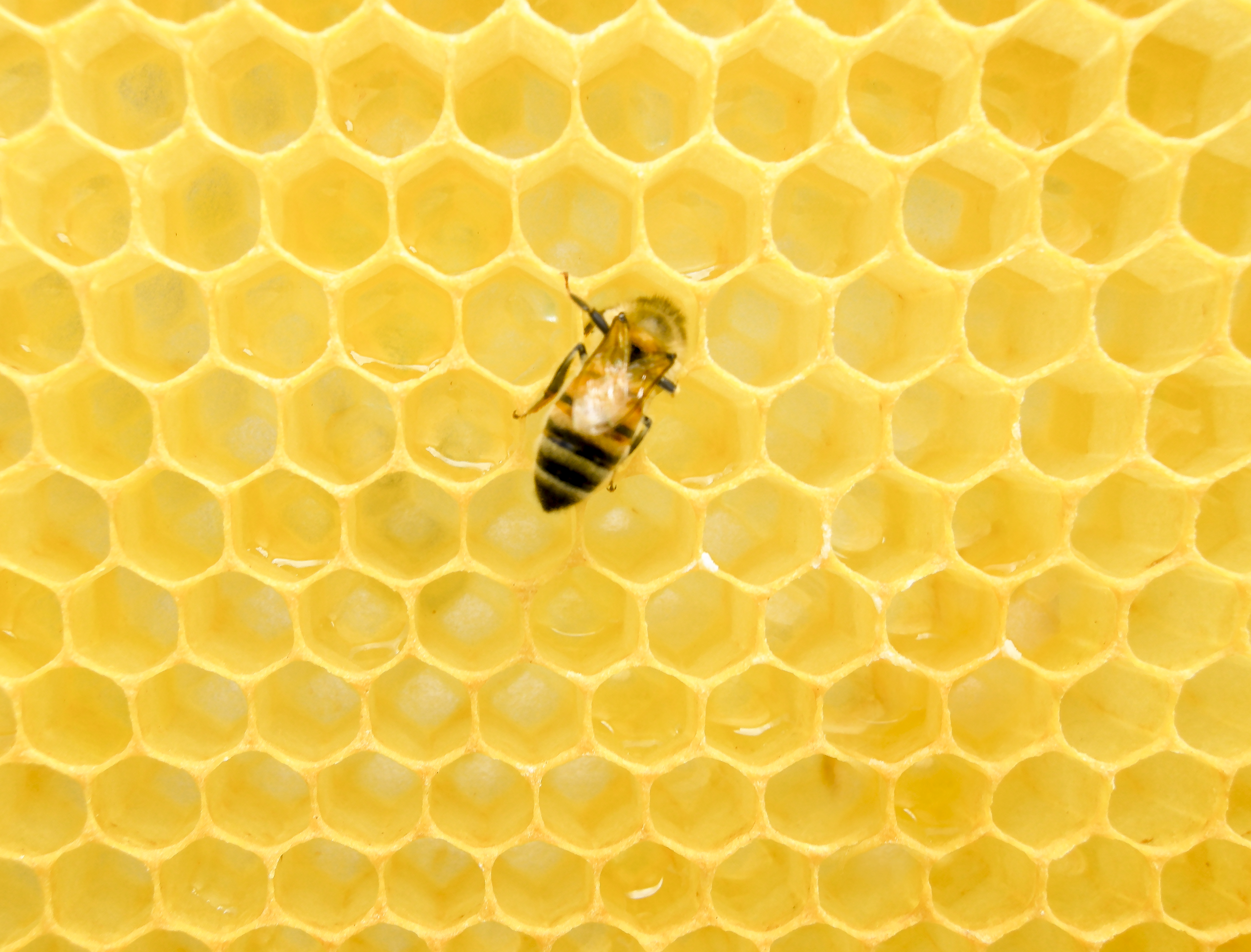
A bee on a wax honeycomb on a farm in east Texas. Photograph by Matthew T Rader, MatthewTRader.com, Wikimedia Commons — CC BY-SA 4.0. Original photograph · CC BY-SA 4.0
A meeting on our liqueur list
At La Corte Segreta, our honey drink, offered at 37 % vol., opens another door into the world of Italian spirits. Honey brings its sweetness and aroma to a grappa base. This meeting creates a glass in which the character of pomace and floral expression can respond to each other.
To understand the material that comes before this blend, we need to return to grappa and grape spirits: grappa comes from the skins and other parts of the grape left after winemaking.
Simple materials, ancient practices
Grappa belongs to an agricultural history: giving a new expression to what winemaking leaves behind. Distillation transforms fermented pomace into a spirit; honey brings the work of bees and the fragrance of the plants they have visited. Their combination appears notably in the liqueur traditions of Alpine regions.
In Venice, spirit makers had already formed a guild in 1601. By the early 18th century, their trade had even left its name in the city, with Calle and Ponte dell’Acquavita. We like this small piece of history: behind a glass are also workshops, artisans and places.
Honey comes after the still
In this family of preparations, grappa is first obtained from fermented pomace. Honey is then incorporated into the spirit. Depending on the recipe, water is also used to adjust the blend. The choice and quantity of honey and the strength of the base change the aroma, sweetness and mouthfeel.
It is a preparation based on grappa and honey. A honey spirit follows a different path: the honey is fermented with water before distillation. Here, grape and honey meet in the blend.
Honey has a character of its own
Honey brings more than sweetness. Its botanical origin influences its colour and aromas: a delicate, floral honey does not create the same balance as a darker, more assertive one. In the glass, sweetness transforms the encounter with the spirit, but the honey’s aroma should remain perceptible.
We also use this ingredient in our kitchen, with the Piedmont chestnut honey that accompanies some of our pizzas. Its culinary use shows what we enjoy in honey: a flavour that accompanies other ingredients and gives them an additional expression.
Taking time to discover both ingredients
At La Corte Segreta, this glass extends our interest in different expressions of the grape. We invite you to find the honey’s aroma first, then the character of the spirit and the persistence of the whole. The pleasure lies in their meeting, with sweetness that leaves room for substance.
Grappa and grape spirits: grapes in another form →
Organic Piedmont chestnut honey →
Mountains and volcanoes: liqueurs with character →
