Peas
Peas from Emilia-Romagna on Mezzogiorno: understanding their sweetness and their role among the ingredients of this La Corte Segreta pizza.

The pods of Pisum sativum, the cultivated pea. The peas we shell are the seeds protected inside these pods. Source and credit: Rasbak · 2005, publication of the photograph · CC BY-SA 3.0.
Peas are uncommon in the world of pizza. Many customers do not immediately think of this ingredient when they picture an Italian pizza. Yet, used well, they bring natural sweetness, lovely colour and a very pleasant texture.
At La Corte Segreta, peas arrived on our menu with Mezzogiorno. At first, some customers found the idea surprising. After tasting it, many understood their role in the pizza’s balance. Today, several customers can no longer imagine this pizza without them.
Peas from Emilia-Romagna
At La Corte Segreta, we use peas from Emilia-Romagna, a major agricultural region in northern Italy. The region is known for its strong connection with farming and quality Italian cooking.
The pea is a simple ingredient, but it needs to be chosen well. Its skin should remain thin, its texture tender and its flavour naturally sweet.
An ancient ingredient in Italian cooking
The pea, called Pisum sativum, is among the ancient crops of the Mediterranean basin and the Near East. It was already known in antiquity, then spread across Europe with agriculture.
Peas were already used in several dishes in Roman cooking. The culinary collection attributed to Apicius contains several recipes with peas or peas in their pods. This shows that the ingredient is no modern invention. It has long been part of the food history of Europe and Italy.
Why peas work on a pizza
Their sweetness balances stronger ingredients. Their texture gives a different mouthfeel. Their vegetable flavour brings freshness to a pizza containing richer or saltier products.
This is why they work so well with guanciale, egg, sautéed onions and cheese. They do not dominate the pizza. They connect the ingredients.
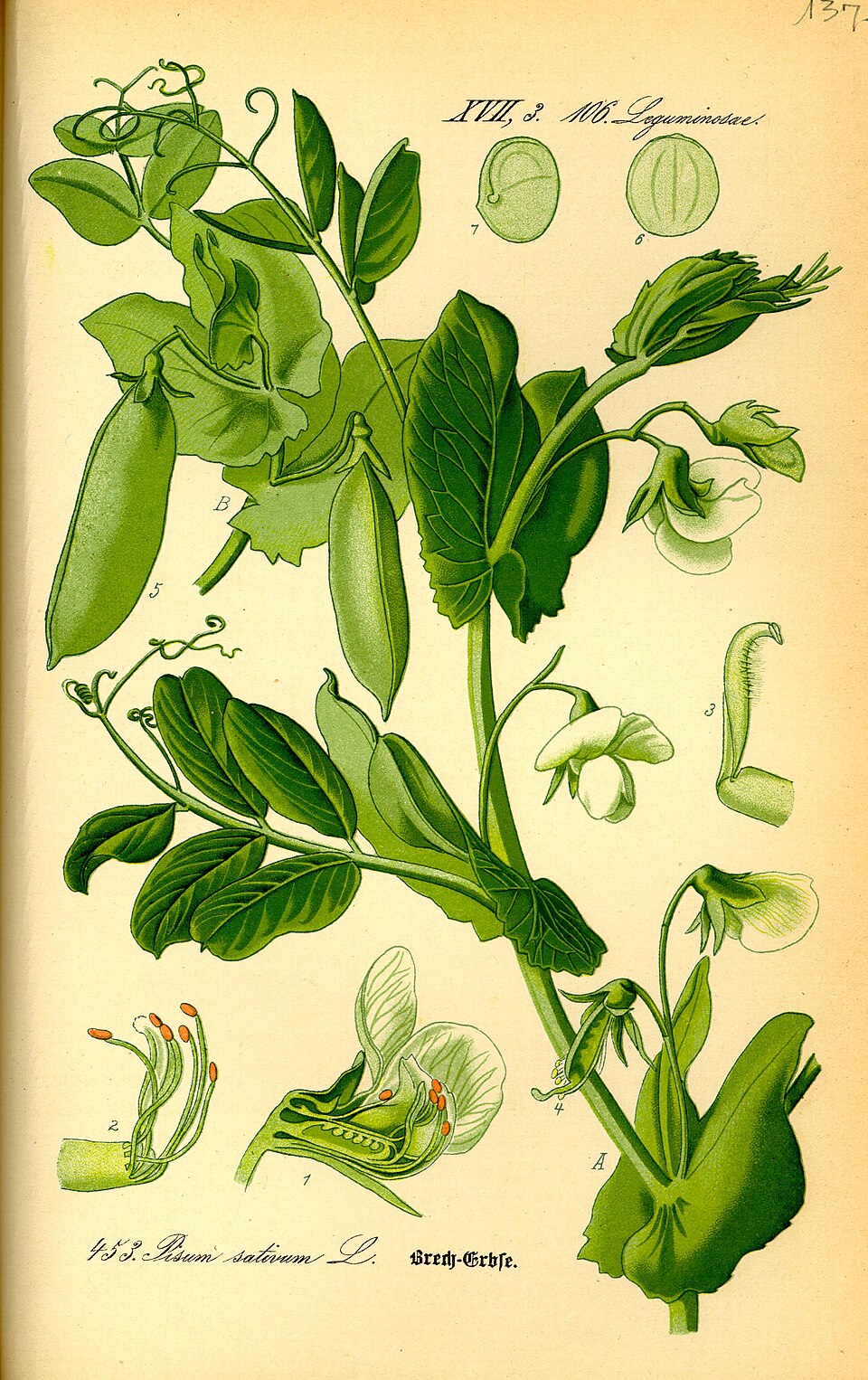
The cultivated pea in Otto Wilhelm Thomé’s illustrated flora, published in 1885. The plate brings together leaves, flowers, pods and seeds to explain the whole plant. Source and credit: Otto Wilhelm Thomé, Flora von Deutschland, Österreich und der Schweiz · 1885 · Historic public-domain work.
How we use them at La Corte Segreta
Peas arrived at La Corte Segreta with Mezzogiorno. This pizza was designed for people who enjoy bacon-style pizzas, with generous flavours, richness, tenderness and character.
But Mezzogiorno goes beyond a simple pizza with lardons. We do not use lardons on this pizza. We use a more carefully developed combination: Italian tomato sauce, fior di latte, peas from Emilia-Romagna, onions sautéed in-house, guanciale PAT, fresh egg and freshly ground black pepper.
After the pizza leaves the oven, we add shavings of Grana Padano DOP and organic Sicilian oregano. This finish brings more aroma, more depth and a clearer sense of the ingredients.
A story about peas
The pea also holds an important place in the history of science. In the 19th century, Gregor Mendel used pea plants to study how traits pass from one generation to another. His experiments laid the foundations of modern genetics.
Useful links and sources:
Product and process certifications | Conserve Italia
Molecular Evidence for Two Domestication Events in the Pea Crop - PMC
Related archive articles
Homemade ragù alla bolognese →
Guanciale — Italian pork cheek →
