Pils and lager: the golden beer that changed the world
A Bohemian town, cool cellars and an invisible revolution in yeast.
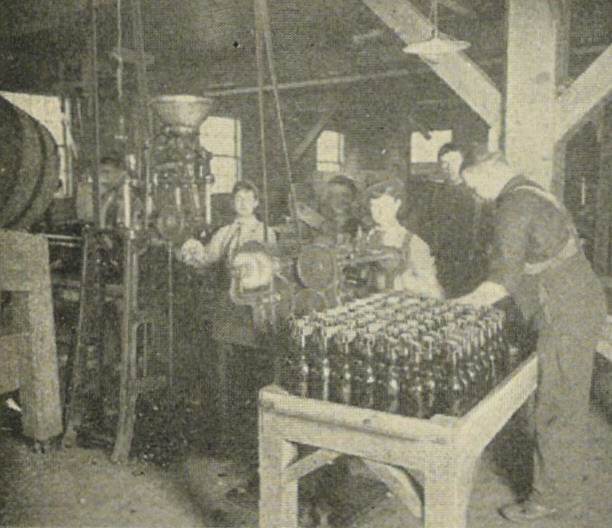
Bottling Rainier beer in Seattle in 1900, from Seattle and the Orient. The photograph documents the industrial organisation of brewing work at the turn of the twentieth century; it does not depict Stella Artois or a Belgian brewery.
Photographe non identifié · Seattle and the Orient, ouvrage dirigé par Alfred D. Bowen · 1900 · Document source · Public domain
Plzeň, 5 October 1842
In the Bohemian town of Plzeň, local citizens built a brewery to improve beer whose quality had become inconsistent. On 5 October 1842, Josef Groll brewed the first batch of the new Pilsen beer there. Pale malt, soft local water and Saaz hops produced a golden beer that would become the historical reference for pilsner. Its name still carries the name of the town.
Pils and lager: understanding the words
Lager is a broad family of bottom-fermented beers, usually fermented and matured at cool temperatures. Pils, or pilsner, is a pale style within that family, balancing grain flavours with hops. Every pilsner belongs to the lager family, but lagers can also be amber or dark. Colour alone therefore cannot identify the fermentation method. The German word Lager points to the practice of storing and maturing the beer.
1883: a revolution the size of a cell
At the Carlsberg Laboratory, Emil Christian Hansen isolated and propagated yeast as a pure culture. It was first used on a production scale in November 1883. Brewers gained a crucial tool for making fermentation more consistent. Behind a seemingly straightforward beer lie temperature control, patient maturation and a level of microbiological precision developed during the nineteenth century. A clear glass can conceal a remarkable scientific history.
Three perspectives on our menu
Stella Artois represents Belgian pilsner: a golden colour, grain and hop bitterness. Ichnusa Non Filtrata is still a lager, but retains a haze of suspended yeast: unfiltered does not mean wheat beer. Carlsberg 0.0 offers the malt and hop character of an alcohol-free lager. Together they show how fermentation family, filtration and alcohol content describe different aspects of beer, rather than three interchangeable labels for its appearance.
Sources and documentation
Prazdroj — the first Pilsen beer in 1842
Carlsberg — Emil Christian Hansen and pure yeast culture
Ichnusa — official Non Filtrata description
Stella Artois — official style description
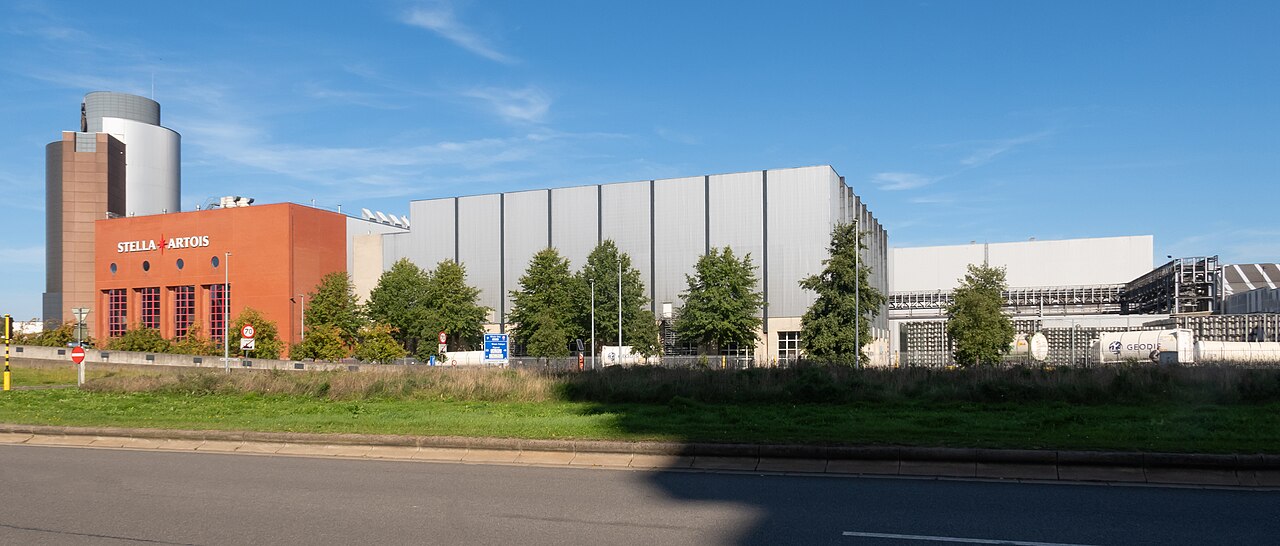
The Stella Artois brewery in Leuven, photographed in 2023. Its industrial buildings and silos place the name on the beer list in a real brewing setting.
Michielverbeek · 2023-10-01 · Document source · CC BY 4.0
Discover more in our beer archives