Sulphites in wine, from the barrel to the label
Why does the back of a wine bottle say ‘contains sulphites’? The answer starts with an old cellar practice, burning sulphur in barrels, and continues with what happens in the wine itself.
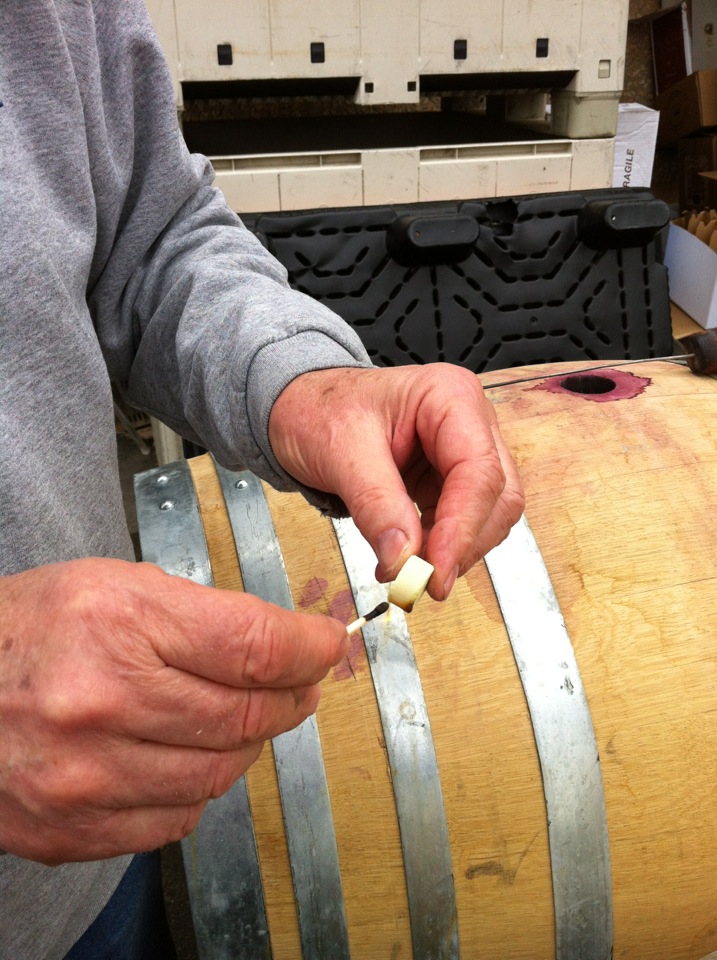
Lighting a sulphur disc before treating an empty barrel. The photograph was taken in 2012 and shows how an old cellar practice continues today.
Agne27 · Wikimedia Commons · CC BY-SA 3.0 · Original photo · Licence
It began with an empty barrel
In 1801, the French chemist Jean-Antoine Chaptal described a familiar cellar practice. Before filling a barrel, winemakers would burn a sulphur-soaked wick inside it. Burning sulphur released a gas, sulphur dioxide, also known as SO₂. This is how barrels were sulphured.
The practice addressed a practical problem. A reused barrel could harbour microorganisms that would spoil the next wine to go into it. Over time, winemakers also learnt to add measured amounts of SO₂ directly to grape juice or wine.
Explore further · Why was sulphur burned in wine barrels? →
Yeast makes it too
As yeast turns grape sugars into alcohol, it can produce SO₂. So a wine made without added sulphites can still contain some. The amount produced depends partly on the yeast and the juice it starts with.
If a winemaker chooses to add it, they may use a sulphur dioxide solution or potassium metabisulphite, for example. In wine, SO₂ is present in several forms, including sulphites.
Two jobs in the wine
The first is to slow some reactions involving oxygen. These can change a wine’s colour and aromas, much as air turns a cut apple brown.
The second is to hold back certain yeasts and bacteria that could spoil the wine. Depending on what is needed, a winemaker can use it at different stages, such as in the juice before fermentation or in the wine before bottling.
What ‘contains sulphites’ tells you
In the European Union, sulphites must be declared when the concentration is above 10 mg per litre, expressed as total SO₂. The total includes what fermentation produces and any amount that was added.
The wording tells you that the threshold has been exceeded. It gives neither an exact amount nor the source of the sulphites. ‘No added sulphites’ describes how the wine was made. Sulphites produced by fermentation can still be present.
Also in our archives
Sources
Jean-Antoine Chaptal · L’art de faire, gouverner et perfectionner les vins, 1801
International Organisation of Vine and Wine · SO₂ in winemaking
