Saint-Rémy de Rochefort: a story of renewal
Since 1230: the first nuns, the hardships, the revival of 1887 and a heritage that resonates with us at La Corte Segreta.
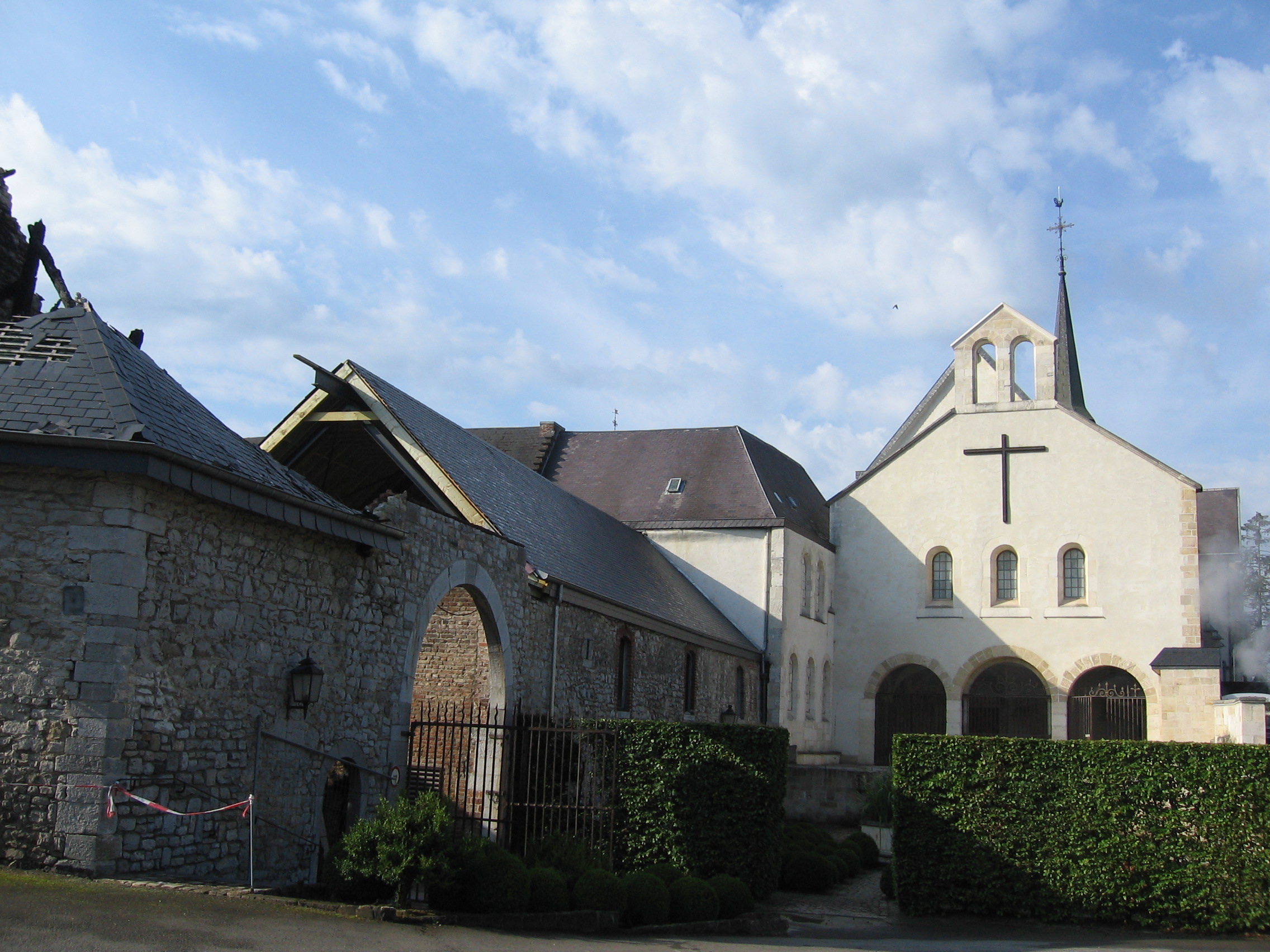
Notre-Dame de Saint-Rémy Abbey in Rochefort, photographed in August 2011 — Grentidez, Wikimedia Commons, CC0.
At La Corte Segreta, a beer can open the door to a much wider story. Behind Rochefort 10 stands Notre-Dame de Saint-Rémy Abbey in Famenne, in the province of Namur. Its origins date back to 1230. Nearly eight centuries separate us from that foundation: communities have succeeded one another, buildings have disappeared and others have been rebuilt. We like this place for what it tells us about time, work and passing on a legacy.
1230: a story that begins with women
On 13 June 1230, Gilles de Rochefort, also known as Gilles de Walcourt, donated land to establish a community of Cistercian nuns. The monastery was then called ‘Secours Notre-Dame’. This first chapter deserves to be remembered: the place we now associate with monks and their beer began with a community of women.
In 1464, following an inquiry into the situation of the two houses, the nuns of Rochefort and the monks of Félipré, near Givet, exchanged establishments. Saint-Rémy was then in debt, and its buildings threatened to collapse. The agreement was signed on 11 November. Cistercian monks thus took over a monastery already more than two centuries old.
‘Bent, I rise again’
Saint-Rémy endured the upheavals of its time. In 1650, troops from Lorraine looted the abbey; the following year, they occupied the abandoned monastery while the religious community had taken refuge in Marche. Rebuilding became a necessity for both the buildings and the life of the community.
The abbey’s motto, ‘Curvata resurgo’ — ‘Bent, I rise again’, takes on its full meaning in this journey. We see it as a way of understanding the abbey’s history: hardship, loss and then the determination to begin again. Saint-Rémy’s heritage preserves the memory of these reconstructions.
A break, then the revival of 1887
The late 18th century brought a profound rupture. The religious community was secularised in 1792; in 1797, amid the Revolution, the estate was confiscated and sold as national property. Some of the buildings were later demolished. It would therefore be misleading to imagine monastic life remaining uninterrupted since the Middle Ages.
In 1887, Trappist Cistercians from Achel acquired the estate and restored Cistercian life. They restored and rebuilt. The community became a priory in 1891, then regained abbey status in 1912. In the meantime, the new church was consecrated in 1902. This return, after an interruption of nearly a century, gives Saint-Rémy a true story of renewal.
A heritage visible in the stone
The abbey still bears traces of several periods: outbuildings dated 1752, 18th-century Saint-Rémy marble pilasters, then the monastic buildings constructed between 1892 and 1900. The church from this reconstruction was adapted to a neo-Romanesque style in 1992–1993.
From farming to brewing heritage
Monastic life combines prayer and work. For a long time, farming and the use of the estate’s resources supported Saint-Rémy. Beer is also part of this history: the earliest known written evidence of brewing dates back to 1595. This date records an activity already taking place; it does not, by itself, establish the date of the first brew.
In the 20th century, the brewery took on an increasingly important role. The brewhouse opened in 1960, with its copper vessels and stained-glass windows, earned the nickname ‘the cathedral of beer’. A new brewhouse entered service in 2020; the old one was preserved as a witness to the heritage. Continuing to produce and preserving what came before became two ways of passing on a legacy.
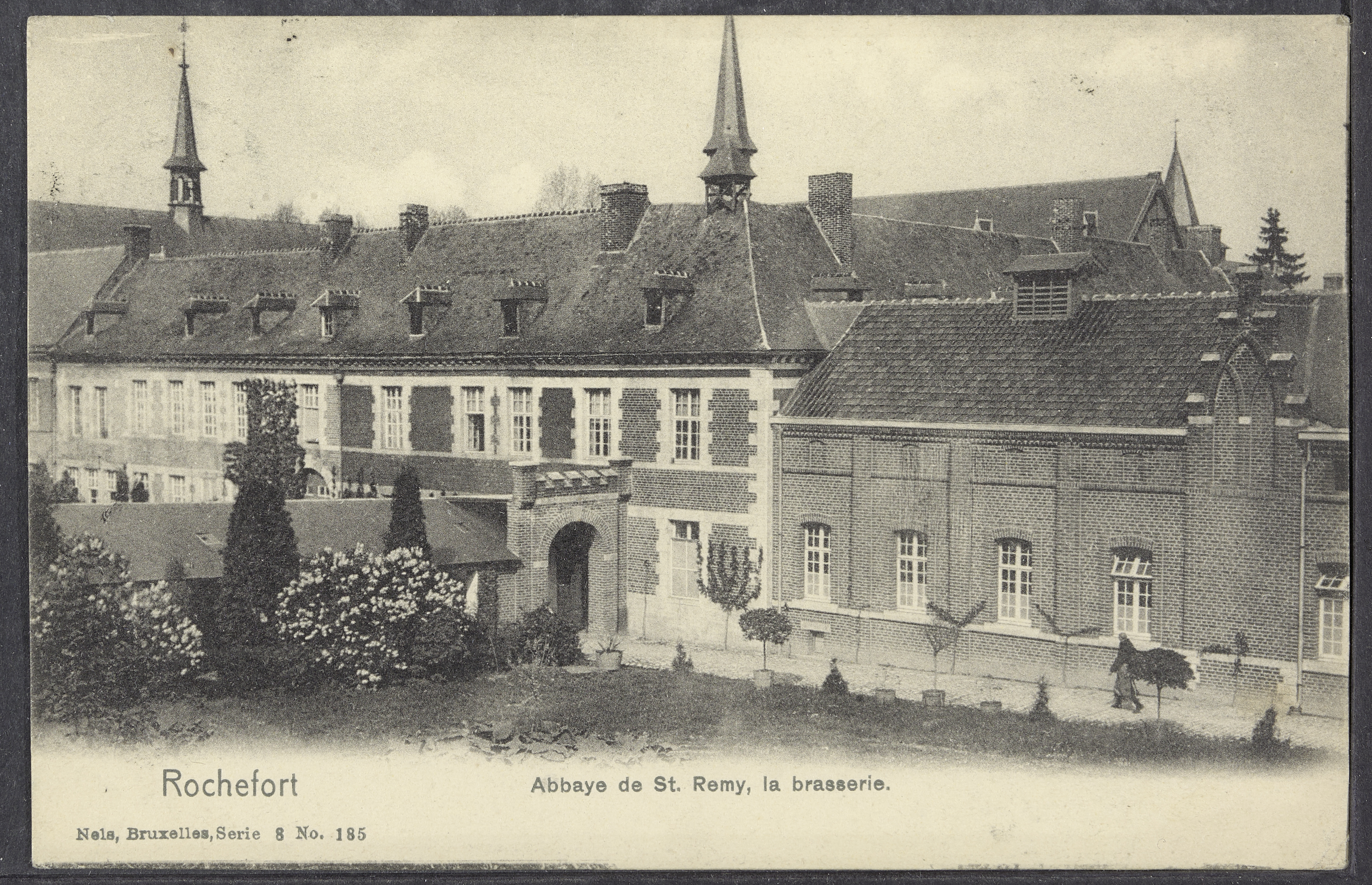
‘Rochefort. Abbaye de St. Remy, la brasserie’ — postcard published by Nels, around 1906. KU Leuven library collections, via Wikimedia Commons; public domain.
Rochefort 10: the story behind the ‘Merveille’ →