Trappist beers · From La Trappe to the Authentic Trappist Product label
The name ‘Trappist’ belonged to a monastic community before it appeared on a beer. It comes from an abbey in Normandy and travelled with monks forced into exile. Today the Authentic Trappist Product label also tells us where a beer is brewed, who oversees production and where the proceeds go.
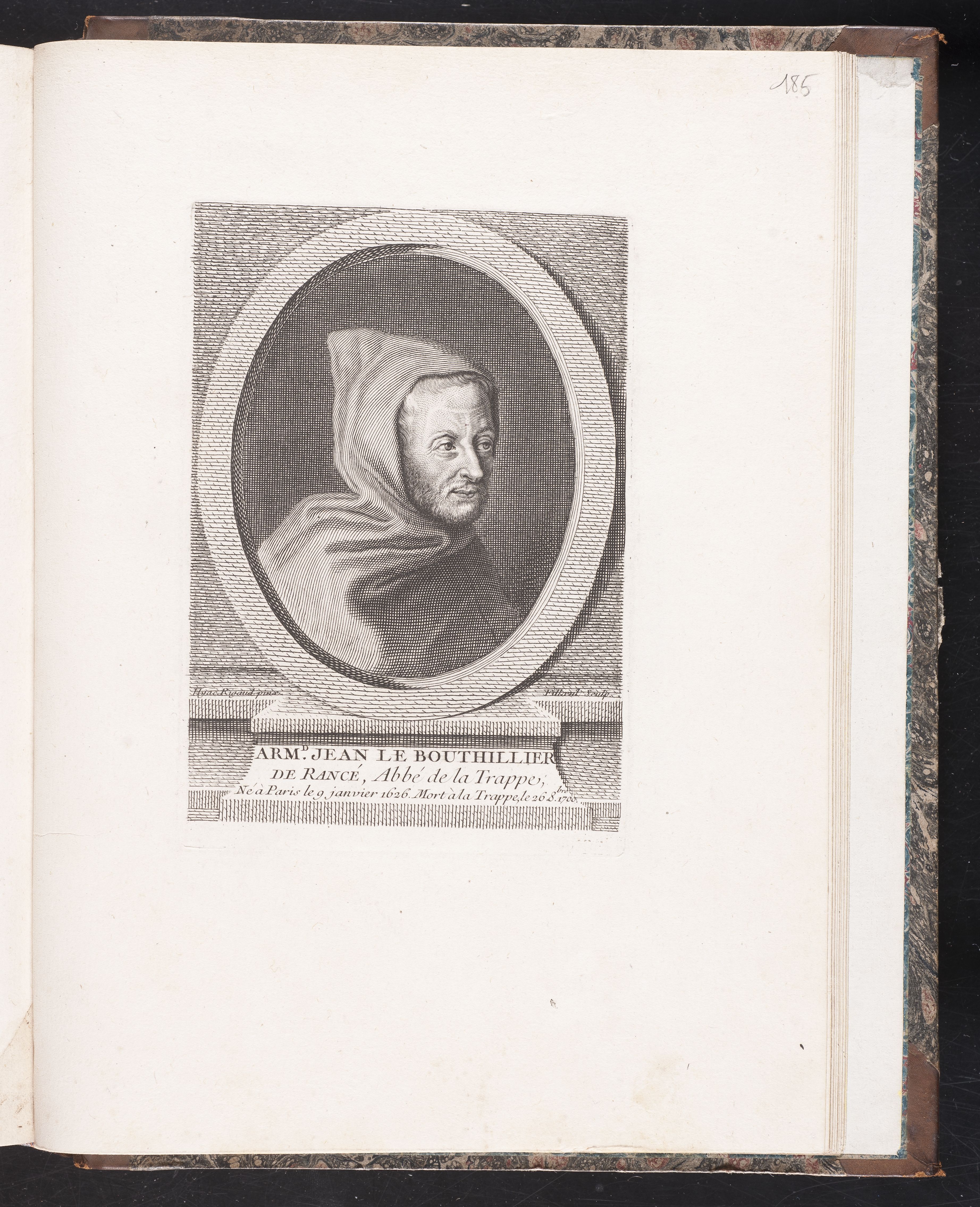
Armand de Rancé, abbot of La Trappe, in an eighteenth-century engraving.
Pierre Filloeul · Hyacinthe Rigaud · KU Leuven Libraries · View the document · Public domain
A reform in Normandy, a refuge in the Campine
Trappists follow the Rule of Saint Benedict, which gives a place to prayer, reading and manual work. Their monastic family goes back to the founding of Cîteaux in 1098. In 1664, at La Trappe Abbey in Normandy, Armand de Rancé restored a more austere way of life. The communities that followed the reform became known as Trappists. In 1892, their congregations joined to form the Order of Cistercians of the Strict Observance.
The French Revolution drove monks from La Trappe into exile. In 1794, a group bound for America settled instead on a farm in the Campine, at Westmalle. The monks turned heathland and marshes into farmland. Brewing came later, after they had established a livelihood on the land.
In 1836, a beer brewed for the monks’ table
When Westmalle became an abbey in 1836, the monks were allowed to have the local drink with their meals. Father Bonaventura Hermans and Brother Alberic Kemps set up the brewery. On 10 December 1836, the community tasted its first beer, a sweet, dark brew with a low alcohol content.
At first the beer stayed at the monastery table. In 1856, the abbey began selling it occasionally at its gates. At Westmalle, brewing for meals grew into a way to support the community and help fund other projects.
What ‘Trappist’ means on a label
Trappist® is a protected trademark reserved for products of Trappist abbeys. It tells you about the product’s monastic origin. Each abbey makes its own brewing choices and uses its own recipes. A blond beer, a dark beer and a tripel can all be Trappist, with markedly different flavours and alcohol levels.
The International Trappist Association (ITA), founded in 1998, protects that origin and offers a separate certification called Authentic Trappist Product, or ATP. Only abbeys that belong to the association can apply. Mont des Cats beer shows the distinction. The ITA recognises it as Trappist and explains that it is brewed at Chimay. The Mont des Cats products on the ITA’s ATP list are its cheeses.
The three requirements for ATP certification
1. Place of production. The product must be made in the immediate surroundings of the abbey. For beer, this concerns where the brewing takes place.
2. Community oversight. The monks or nuns must supervise production. Lay employees can take part in brewing, as they do at Rochefort, under the community’s responsibility.
3. Use of the proceeds. They go towards the needs of the monastic community, solidarity within the order, development projects and charitable work. The brewery serves the life of the monastery.
How the association checks those requirements
After the product has been on sale for several months, the abbey submits a dossier setting out the community’s responsibilities, production methods, quality checks, distribution channels and public communications.
A member of the ITA board and a member of its Quality Committee visit the abbey and production site. They audit quality and check traceability. The board reviews the findings, discusses them with the abbey and votes. A licence covers one product or a product category and lasts five years. Continued use of the label beyond that term requires renewal.
Passing on a tradition at the table
In 1996, the Scourmont community set up the Chimay-Wartoise Foundation, which supports projects with a social purpose. UNESCO, which added beer culture in Belgium to its Representative List of Intangible Cultural Heritage in 2016, also highlights the contribution of Trappist communities and their charitable work.
At La Corte Segreta, serving these beers is a way to pass that culture on. A Chimay, an Orval, a Rochefort and a Westvleteren each tell the story of a different community. Tre Fontane, in Rome, shows the same tradition meeting a different landscape and brewing practice. Comparing them gives a sense of what each abbey has made of that inheritance.

The entrance to Saint Sixtus Abbey around 1919, on a postcard held by KU Leuven Libraries: a historical view of Westvleteren’s monastic home.
Auteur et éditeur inconnus · KU Leuven Libraries · Vers 1919 · Document source · Public domain
Also in our archives
Tre Fontane, Rome’s Trappist Tripel →
The eucalyptus trees of Tre Fontane, from valley to beer →
Sources
Ordre cistercien de la stricte observance · Notre histoire
Ordre cistercien de la stricte observance · Abbaye de La Trappe
Westmalle · L’histoire de l’abbaye
Westmalle · L’histoire de la brasserie
Association internationale trappiste · Trappiste® et ATP
Association internationale trappiste · Critères et attribution du label
Association internationale trappiste · Rochefort et Mont des Cats
Chimay · Fondation Chimay-Wartoise