The eucalyptus trees of Tre Fontane, from valley to beer
Why does a Roman Trappist tripel use eucalyptus leaves? The story begins in the nineteenth century, when the monks of Tre Fontane tried to make their valley habitable despite malaria.
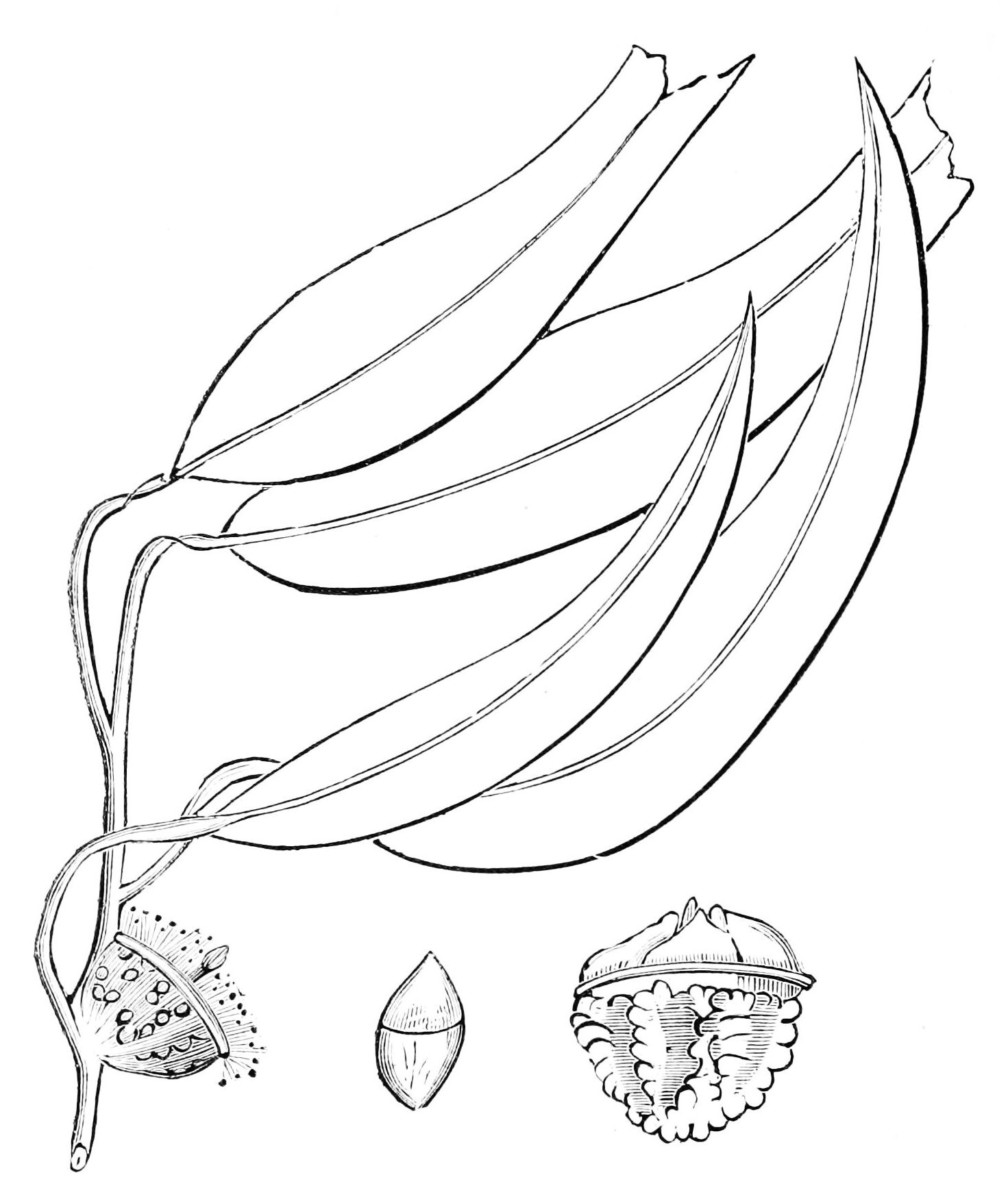
Botanical plate of Eucalyptus globulus published in 1877–1878, around the time of the early plantings at Tre Fontane.
Popular Science Monthly · vol. 12 · View the document · Public domain
Restoring a monastery and making it safe to sleep there
In 1868, the Trappists took charge of an abbey in need of repair. Water collected in the valley, and recurrent fevers made it difficult to live there. In an investigation published in 1896, William North reported that until 1874 the monks had to return to Rome to sleep. They began redirecting and draining the water and planting eucalyptus trees, which are native to Australia.
According to the abbey’s history, a long-term lease covering 450 hectares after 1870 required the monks to plant at least 125,000 eucalyptus trees. The figure shows the scale of the project and represents the commitment set down in the agreement.
The trees and the limits of an idea
At the time, people hoped eucalyptus would make the site healthier. Yet William North recorded another outbreak of fever in 1882, when the plantations were already growing. Today we know that malaria is mainly transmitted by the bites of infected female Anopheles mosquitoes. The abbey credits several measures with bringing the local problem under control, including filling in a pond, using mosquito nets and administering quinine.
Leaves that tell the story of a place
Eucalyptus later found its way into abbey products, including a liqueur called Eucalittino. In 2015, after several years of trials, the leaves became an ingredient in Tre Fontane Tripel. A detail you can notice in the glass points back to the work that changed the landscape.
Also in our archives
Tre Fontane, Rome’s Trappist Tripel →
Trappist beers · From La Trappe to the Authentic Trappist Product label →
Sources
Abbazia Tre Fontane · I monaci trappisti oggi
William North · Roman Fever (1896), pp. 125–126 · Wellcome Collection
World Health Organization · Malaria
