Muscats: fragrant grapes, several distinct varieties
Fragrant grapes, several distinct varieties
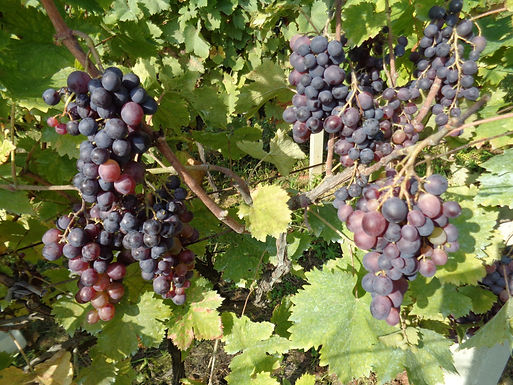
Muscat of Hamburg ripening on the vine in Međimurje, northern Croatia, in 2016: a black-berried example of the Muscat family. This photograph illustrates the family's diversity without attributing this grape to any wine or grappa on our list. Photo: Silverije — Wikimedia Commons, CC BY-SA 4.0.
A family name, not a single identity
Muscat, Moscato and Muskat can refer to several distinct aromatic varieties. Their most obvious common feature is a fragrance often found even in the fresh grape. The name does not guarantee the same origin, the same bunch shape or a sweet wine. At La Corte Segreta, we therefore distinguish the general family from the precise identity when it is confirmed.
Three identities to distinguish
Muscat Blanc à Petits Grains, or Moscato Bianco has a long European history and plays a central role in the wines of Asti. Muscat of Alexandria, called Zibibbo in Sicily, is another variety, particularly associated with Pantelleria in the world of Italian wine. Moscato Giallo, also known as Goldmuskateller, is yet another distinct variety; its berries take on golden-yellow shades. None of these names should automatically be substituted for another.
Fragrance does not reveal the sugar level
Wines from this family can evoke flowers, citrus, fresh grapes or certain ripe fruits. Fermentation continued until the sugar is consumed can produce a dry Muscat; stopping fermentation or concentrating the grapes opens up other styles, sometimes sweet and sparkling. Winemaking and the exact grape variety must therefore be considered together. When a cuvée says only ‘Moscato’, this family entry provides useful aromatic reference points.

Typical flavour markers for Muscats — a qualitative overview by La Corte Segreta. Terroir and winemaking can alter the profile.
Moscato Bianco: the grape's fragrance, from fruit to flowers →
Zibibbo: Pantelleria's Muscat, between wind and fragrance →
Aleatico: a black grape with a muscat fragrance, from Elba to other vineyards →