Petit Verdot: a small share of the blend, a big presence
A small share of the blend, a big presence
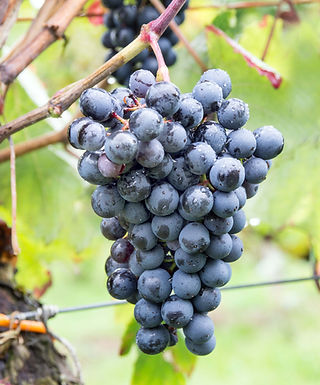
Ursula Brühl, Julius Kühn-Institut (JKI), Bundesforschungsinstitut für Kulturpflanzen, Institut für Rebenzüchtung Geilweilerhof, 76833 Siebeldingen, Germany · Original photograph · CC BY-SA 4.0
An old grape from south-western France
Petit Verdot belongs to the history of reds from south-western France and Bordeaux blends. It is often less visible on a label than Cabernet Sauvignon or Merlot. Its particular quality is its ability to change a wine’s balance in a relatively small proportion: colour, tannins, freshness and aroma take on another dimension. There are also wines in which it plays a dominant role, particularly in regions warm enough for it to ripen.
The winegrower’s patience
Its berries are small, and its shoots can be long and fragile. It ripens late: a season that is too short can prevent it from reaching the desired balance. Well-drained soils, exposure and sufficient water availability during the season all matter in its cultivation. These demands explain why it does not have the same role everywhere. In a warm year, the calendar can work in its favour; in cooler conditions, ripeness becomes a central concern. We therefore need to look at the vineyard before imagining the wine.
In the glass
At good ripeness, it can produce deeply coloured, structured reds, with pronounced tannins and acidity that remains present. Violet, dark fruit, spice and liquorice are among the common reference points. Oak ageing can add toasted or cocoa notes to the bouquet. Grape ripeness and the way tannins are extracted shape its expression.
Understanding its contribution
At La Corte Segreta, its presence helps us understand a blend more precisely. We do not reduce it to a source of colour: it brings substance and expression that can count for a great deal. Comparing proportions and bottle styles reveals its role, even when its name is discreet on the front label.

Typical flavour characteristics of Petit Verdot — a qualitative overview by La Corte Segreta. Terroir and winemaking influence the profile.
Cabernet Sauvignon: structure, blackcurrant and an unexpected relationship →
Merlot: an inviting texture and an origin long shrouded in mystery →
Super Tuscans: the wines that changed perceptions of Italy →