Sangiovese: a common thread through central Italy
A common thread through central Italy
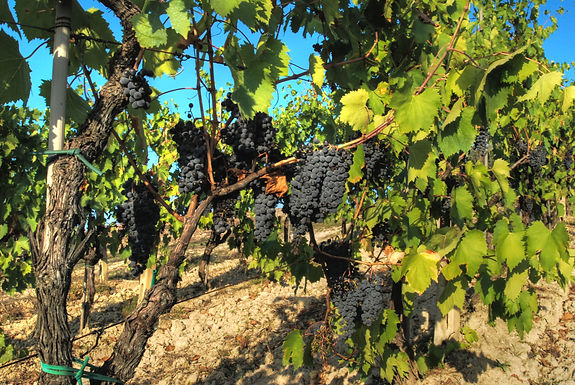
Sangiovese on the vine in Certaldo, Tuscany — Francesco Sgroi, Wikimedia Commons, CC BY 2.0. · Original photograph · CC BY 2.0
One grape, several landscapes
Sangiovese holds a major place in central Italy, particularly Tuscany and Romagna. It features in famous wines such as Chianti, Brunello di Montalcino and Vino Nobile di Montepulciano. Brunello, Prugnolo Gentile and Morellino are among its local names. In Corsica, Nielluccio is also the same grape. These names show the strength of regional identities: a shared grape does not produce uniform wine, and each place has developed its own way of cultivating it and telling its story.
A highly varied family of selections
Sangiovese has considerable diversity among its biotypes and clones. Bunch size, berries, vigour and wine potential can therefore vary within the variety. Relatively early budbreak and fairly late ripening give it a long growing season. It can yield abundantly: controlling production is crucial to obtaining a balanced, sufficiently concentrated harvest. The grape's name is a starting point; it cannot replace work in the vineyard.
Cherry, acidity and tannins
Red fruit, particularly cherry, floral nuances and spices are useful markers. Noticeable acidity and present tannins can provide structure and length on the palate. Young, tank-aged wines often show fruit more directly; oak ageing or prolonged development adds other sensations. Sangiovese can be made into wine alone or blended, so its contribution must be distinguished from the cuvée's final profile.
Montepulciano: clearing up a confusion
Vino Nobile is a wine from the Tuscan town of Montepulciano, made mainly from Sangiovese, locally called Prugnolo Gentile. The Montepulciano grape, emblematic of Abruzzo, is another variety. At La Corte Segreta, this detail helps us read an Italian wine list: geography and botany sometimes use the same word to mean different things.

Typical flavour markers for Sangiovese — a qualitative overview by La Corte Segreta. Terroir and winemaking can alter the profile.
Tignanello: the courage to change Tuscan wine →
Castello di Verrazzano — from Chianti to the shores of New York →
Gaglioppo: Calabrian character and a family revealed by genetics →