Trebbiano di Soave: the same grape, different regional names
The same grape, different regional names
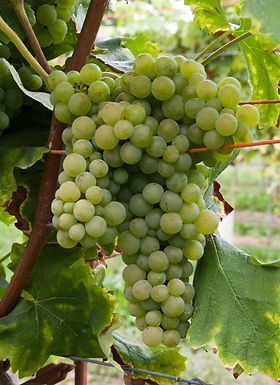
A bunch of Verdicchio, the variety to which Trebbiano di Soave belongs. Ursula Brühl, Julius Kühn-Institut, Wikimedia Commons, CC BY-SA 4.0. · Original photograph · CC BY-SA 4.0
Behind the Trebbiano name
Trebbiano di Soave should not be confused with Trebbiano Toscano. The word Trebbiano covers several identities in Italian vineyards, so the full name matters. Trebbiano di Soave belongs to the same variety as Verdicchio, grown notably in the Marche, with different regional selections and traditions. This shared identity is one of the surprises of ampelography, the discipline that studies and describes grape varieties.
Its place in Soave
In Soave’s vineyards, it can accompany Garganega. Its local history saw a decline: less generous production and different ripening made it less convenient to grow. Its preservation and return to plantings reflect a choice in favour of diversity. In the blend, it brings useful freshness and another way of shaping the wine’s palate.
In the vineyard
The bunches of Verdicchio and its biotypes are generally compact, conical and sometimes winged. The green-yellow berries have resilient skins covered in a waxy bloom. Precise characteristics vary with the selections. The VCR 3 selection, originating in San Bonifacio in the province of Verona, illustrates this work on Trebbiano di Soave: it aims notably for a structured, fruity expression capable of developing. It is therefore not only the grape’s name that matters, but also the plant material and growing conditions.
In the glass
It generally produces whites with noticeable acidity, good presence on the palate and a sometimes lightly almond-like finish. Fruit can remain subtle or become more expressive with ripeness and ageing. Its presence in a blend is not measured by a spectacular aroma: it may be felt chiefly in balance and length. At La Corte Segreta, knowing this identity helps us better understand a Soave and, more broadly, the richness of Italian regional names. The graph’s pointers remain qualitative: terroir, yield, harvest and winemaking alter the result.
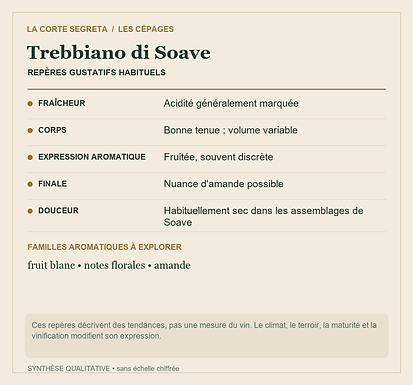
Typical flavour characteristics of Trebbiano di Soave — a qualitative overview by La Corte Segreta. Terroir and winemaking influence the profile.
Campagnola: a family and Verona’s landscapes →
Garganega: Soave’s golden grape →
The Trebbianos: a familiar name, several varieties and identities to distinguish →