Trebbiano grapes: a familiar name, several varieties and distinct identities
A familiar name, several varieties and distinct identities
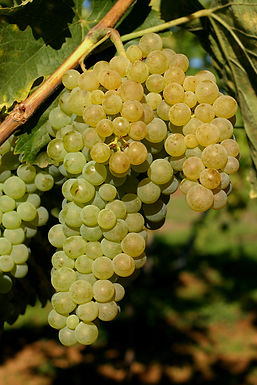
Trebbiano Toscano on the vine: a specific example among the grapes bearing the Trebbiano name. Photograph: Doris Schneider, Julius Kühn-Institut (JKI), Federal Research Centre for Cultivated Plants, Institute for Grapevine Breeding Geilweilerhof, 76833 Siebeldingen, Germany — Wikimedia Commons, CC BY-SA 4.0.
The name alone is not enough
Trebbiano is a name shared by several Italian white grape varieties. Their geographical distinctions must be preserved: Trebbiano Toscano, Trebbiano Abruzzese and Trebbiano di Soave are not three interchangeable names for the same grape. At La Corte Segreta, we enjoy this diversity, which reminds us how wine names also carry regional history. The term Trebbiano d’Abruzzo can refer to an appellation and does not, on its own, prove that a wine is made exclusively from Trebbiano Abruzzese.
The case of Abruzzo
The Trebbiano d’Abruzzo DOC, recognised in 1972, permits a base of Trebbiano Abruzzese and/or Trebbiano Toscano, with a limited proportion of other non-aromatic white grapes. Behind the same wine name, the composition can therefore change. Product specifications and detailed wine factsheets help identify the grapes actually used. Abruzzo’s vineyards also retain an important pergola tradition: the way vines are trained is part of the landscape and influences the exposure of the bunches.
From Italy to French spirits
Trebbiano Toscano is known in France as Ugni Blanc. The same variety can therefore be used to make an Italian wine or a wine intended for distillation, notably for Cognac. Its vigour, consistent production and ability to produce wines with useful acidity explain this versatility. Its aromas generally remain subtle, with floral and fruity notes; yield control, ripeness and ageing can considerably change the wine’s substance and expression.
Soave follows another path
Trebbiano di Soave is the same grape as Verdicchio Bianco: its botanical history therefore leads towards Marche, even when it accompanies Garganega in Veneto. These similar names invite us to look closely at the grapes rather than assign them a shared profile. Our Trebbiano di Soave article explores this identity and its role in the blend in greater depth.
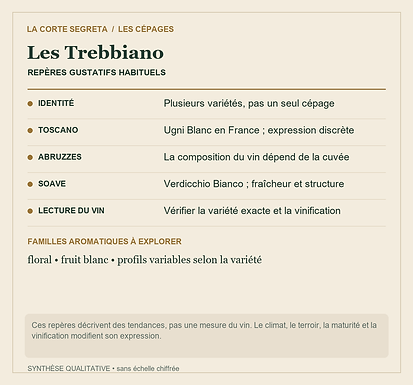
Typical flavour characteristics of Trebbiano grapes — a qualitative overview by La Corte Segreta. Terroir and winemaking influence the profile.
Trebbiano di Soave: one grape variety, different regional names →
Garganega: Soave’s golden grape →
Masciarelli: Gianni’s vision for Abruzzo →