Jacopo Poli — betting on the stills
A Veneto distillery in trouble, Sassicaia pomace, and five years of trials to distil a different way.
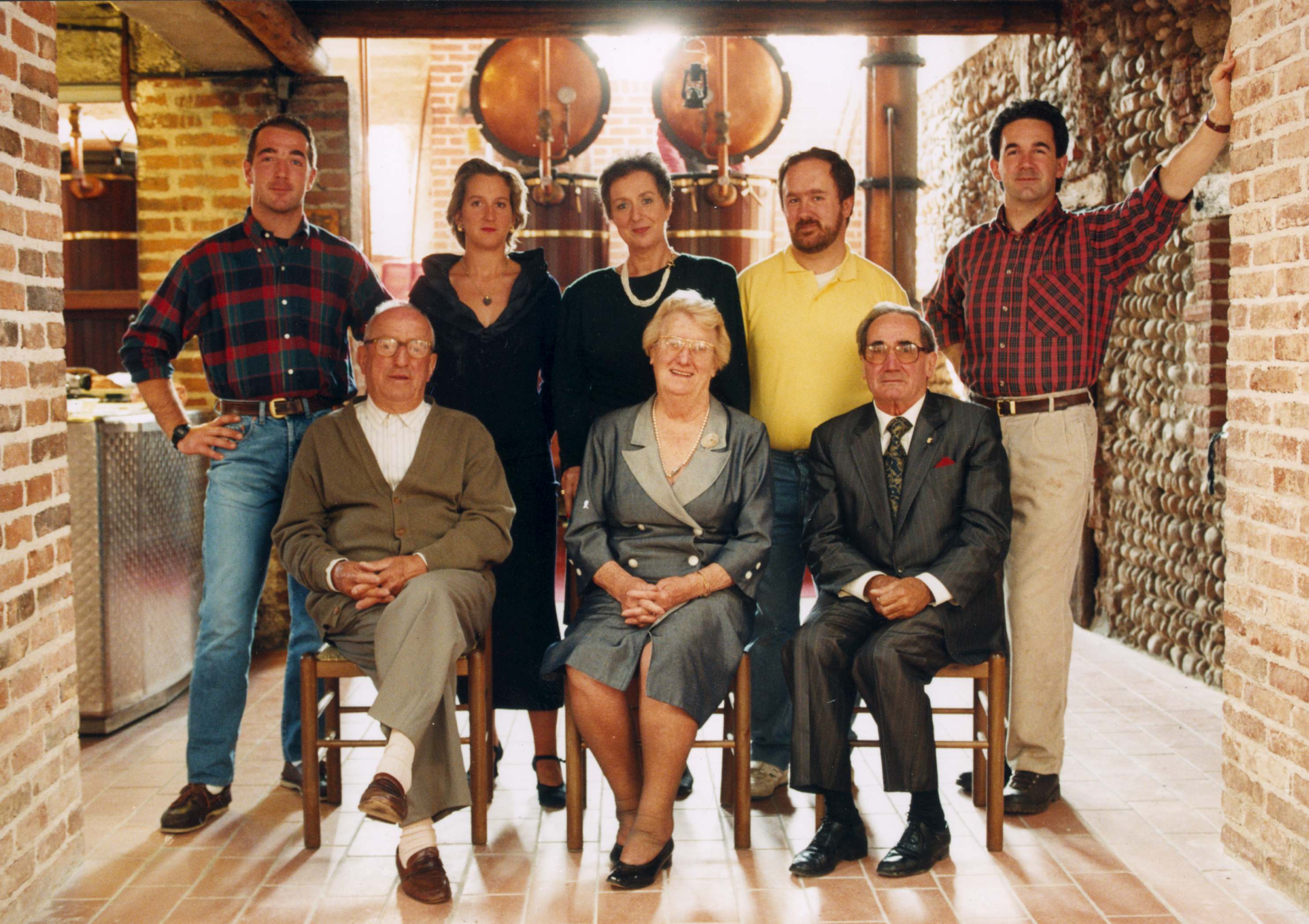
The Poli family celebrates the distillery’s centenary in 1998.
Poli Distillerie archive, via GrappaCom and Wikimedia Commons · CC BY-SA 3.0. Original document · Licence
Around the family table
Jacopo Poli was born in 1963 in Bassano del Grappa, in Veneto. He remembers a meeting in 1976. His father Antonio gathered his children around the table. His brother wanted to sell, and Antonio could buy his share only if he could count on the children’s help. Jacopo gave him his support. Antonio took on debt to keep the business.
After military service, Jacopo worked briefly at Benetton. He chose to return to the distillery. In the 1980s he and his siblings found a business struggling against inexpensive industrial grappa. They committed to small-batch production. In 1993 he opened a museum in Bassano with Cristina to show visitors what happens between the grape pomace and the glass.
Two empty demijohns in Bolgheri
In the spring of 1993, Jacopo met Marchese Incisa della Rocchetta at a Milan hotel. He wanted to make grappa from Sassicaia pomace. The marchese agreed. On the first collection trip, Bruno, the driver, slept outside the Bolgheri winery so he could load up first thing. He had brought two 54-litre demijohns in the hope of tasting the famous wine. He drove back with the pomace and two empty demijohns. The winery sold its wine through other channels.
The Grappa di Bolgheri Sassicaia on our menu starts with Cabernet Franc and Cabernet Sauvignon pomace. Poli distils it in batches in a steam still. The idea was Jacopo’s. The origin of a wine’s skins and seeds is worth knowing, too.
What the vacuum changes
In 2008 Jacopo and his brother Andrea installed a vacuum bain-marie still in Schiavon called Crysopea. The trials ran from 2005 to 2010. The water bath heats the vessel indirectly, and reduced pressure allows distillation at a lower temperature. That gentler heat helps preserve some delicate compounds behind floral and fruity aromas.
Crysopea works alongside the old steam boilers. The Sassicaia grappa is still distilled with steam. For Poli, choosing the still is part of the recipe.
When developing his gin, Jacopo tries to recapture a childhood scent, the pine and juniper he remembers from walks with his father on the Asiago plateau. After a year of trials, the team is dissatisfied and shelves the project. A colleague suggests trying again with the vacuum water-bath still. Jacopo recalls that it was this still that brought out the aromas he wanted. The gin takes its name from the distillery’s address in Schiavon, Marconi 46.
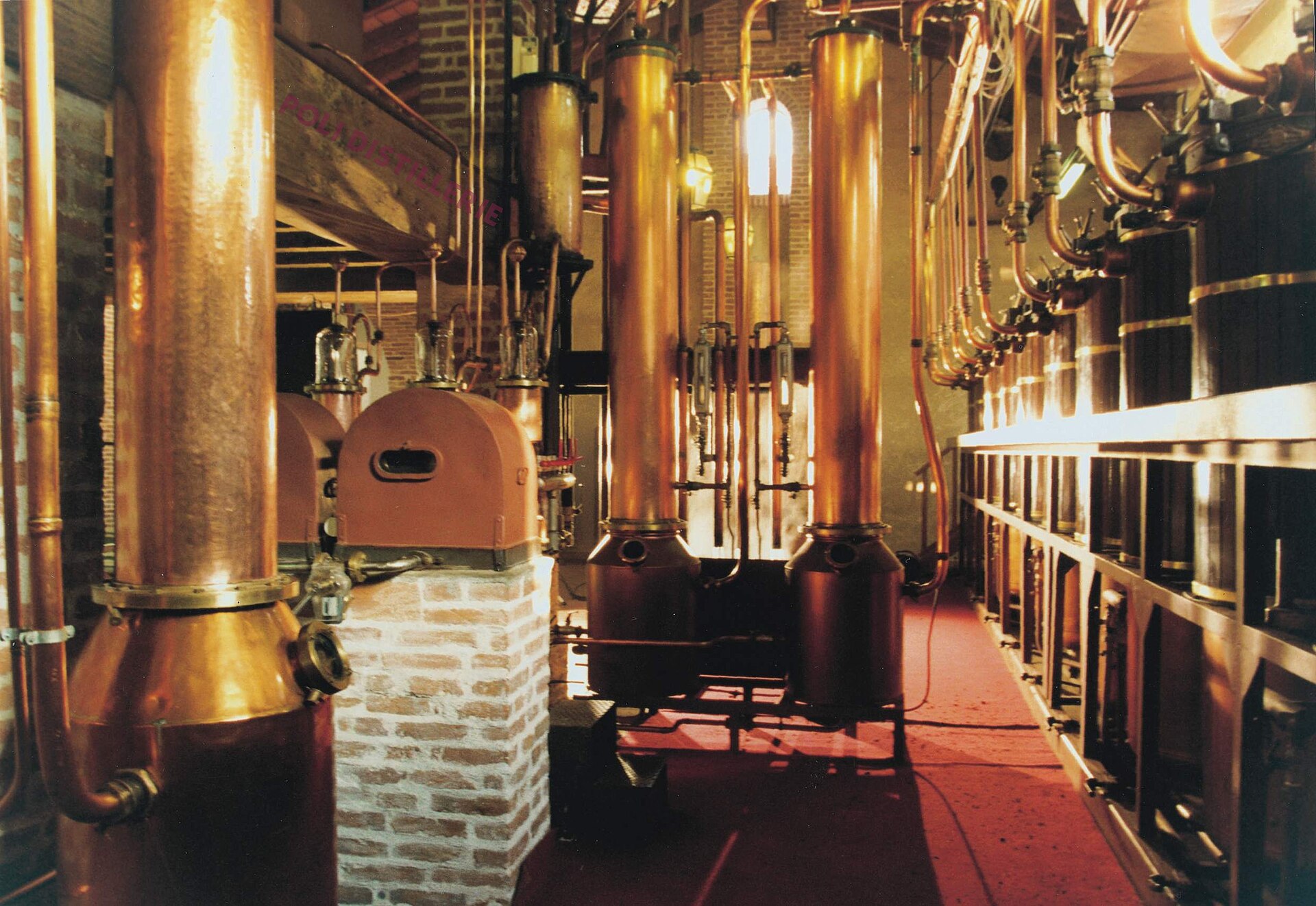
The Poli distillery’s artisan still in 2000, before Crysopea was installed.
GrappaCom / Poli Distillerie · CC BY-SA 3.0 · Original document · Licence
Also in our archives
Grappa di Bolgheri Sassicaia →
Poli Distillerie · the history of the house →
GioBatta Poli · the innkeeper and his still →
Sources
Marco Valisano, Edizioni Ca’ Foscari · 2017 interview with Jacopo Poli
Poli Distillerie · people and family history
Jacopo Poli · the two Sassicaia demijohns
Poli Distillerie · distillery milestones and the installation of Crysopea