Pierre Celis, the milkman who revived Belgian wheat beer
A Hoegaarden milkman revived witbier in his milk shed. After a fire he started again in Texas and passed on his craft as far as Watou.
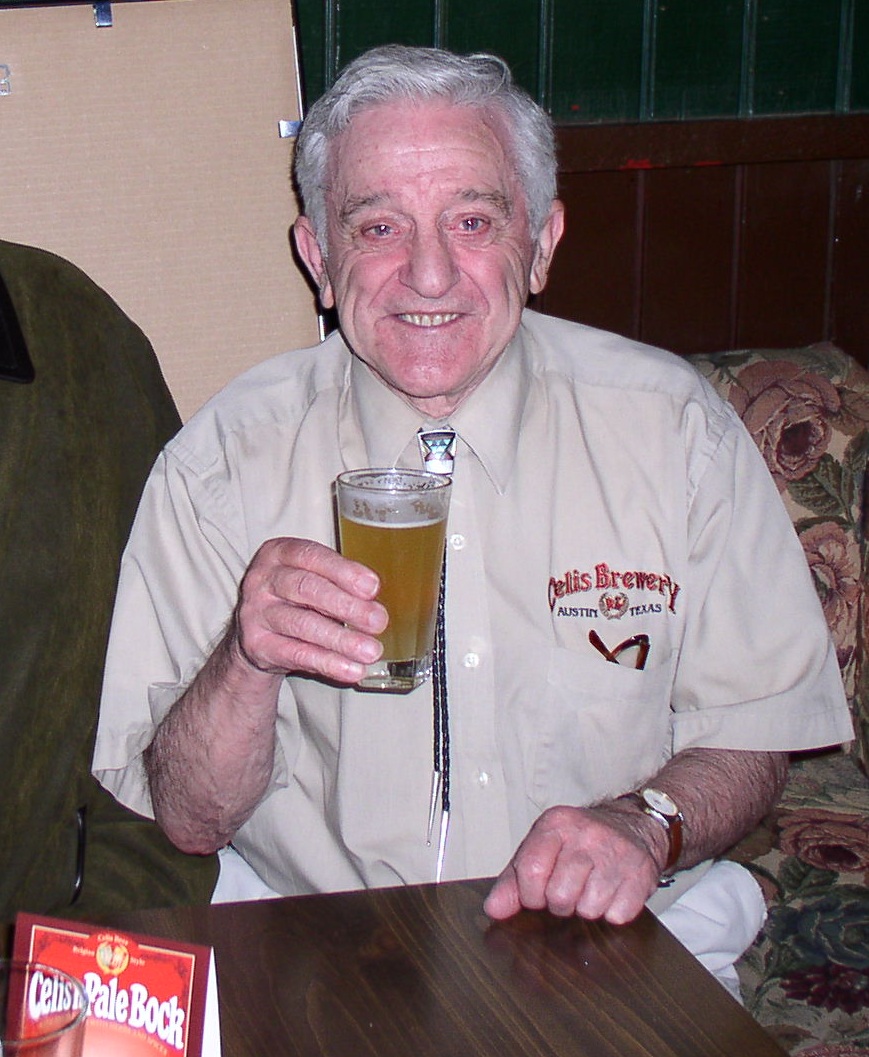
Pierre Celis at the Dog and Duck Pub in Austin, Texas. Photograph by Trent Johnson.
Trent Johnson · View the document · CC BY 3.0
When the Tomsin brewery closed in 1957, Hoegaarden lost its last witbier brewery. Pierre Celis (1925–2011), a village milkman who had helped out at Tomsin in his youth, still knew the craft. In the mid-1960s he began brewing again in his milk shed with a copper boiler.
Bringing back a village beer
Hoegaarden witbier combines wheat with orange peel and coriander. To pass it on, Celis first had to brew it again with what he had to hand. His early batches grew into the De Kluis brewery. According to Hoegaarden, it was producing more than 75,000 hectolitres a year by 1985.
Starting over after the fire
That same year, a fire devastated the brewery. The insurance payout fell short of the cost of rebuilding. Celis accepted outside financial help and eventually sold the business. In 1992, at the age of 67, he opened a brewery in Austin, Texas. Celis White introduced a new audience to Belgian witbier.
From Hoegaarden to Watou
St.Bernardus recalls that Celis helped it refine the recipe for its own wheat beer. At La Corte Segreta, St.Bernardus Blanche offers a taste of the spiced wheat beer tradition he helped carry from one village to another and across the Atlantic.

The Hoegaarden brewery in 2007, in the village where Pierre Celis revived witbier production. Photograph by LLN.
LLN · View the document · CC BY-SA 2.5
Also in our archives
St.Bernardus Blanche: wheat, citrus and our choice →
Belgian wheat beer: wheat, citrus and a revived tradition →
Sources