Blanche and witbier: wheat, citrus and a tradition rediscovered
Behind its pale haze, Belgian white beer tells a story of grain, spice and knowledge passed on.
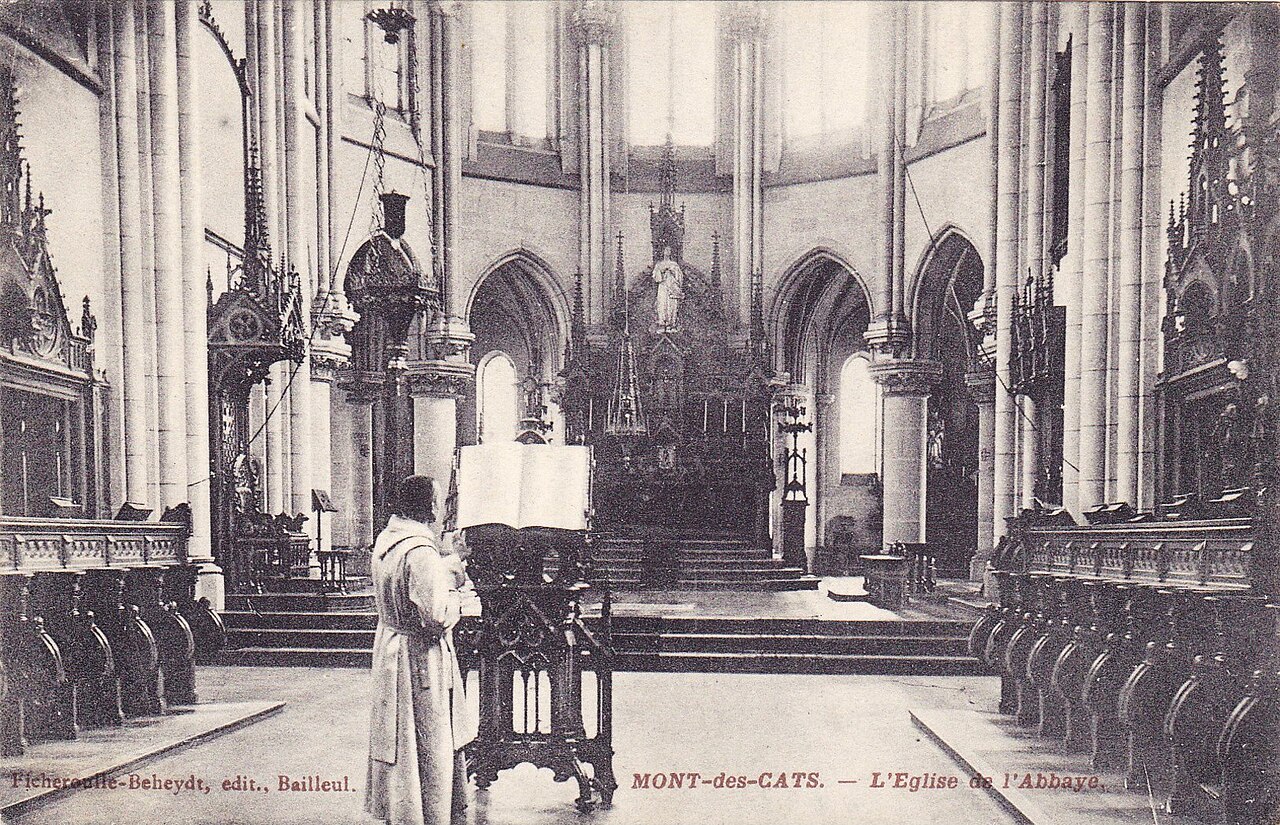
Mont des Cats abbey church around 1895–1900. Monks from this abbey later established a dairy in Watou, one of the roots of the St.Bernardus story.
Auteur inconnu · Vers 1895–1900 · Document source · Public domain
Why call it a white beer?
Witbier is a Belgian wheat ale, generally brewed with both barley and wheat using top fermentation. Its colour ranges from pale straw to deeper yellow. Haze from grain and yeast creates the milky appearance behind its name. “White” therefore means neither clear nor alcohol-free. The recipe and alcohol content still need to be checked for each individual beer; colour alone cannot tell the whole story.
The milkman who revived a style
When the last local brewery in Hoegaarden closed in 1957, a long brewing tradition seemed to have reached its end. Pierre Celis, a milkman familiar with the work of the Tomsin brewery, brought white beer back in the mid-1960s. His story shows how a shared heritage can depend on one person’s memory. Today’s widespread style owes much to that revival.
What to notice in the glass
Wheat contributes a supple, sometimes gently creamy texture. Coriander and orange peel are classic ingredients in this style, while yeast contributes its own aromatic nuances. The balance brings together grain, citrus and restrained spice, usually with modest bitterness. When tasting, separate three impressions: aroma, the feel of the foam and the refreshing finish. Not every wheat beer is a witbier: sharing a grain does not make different brewing traditions the same.
Our example: St.Bernardus Blanche
St.Bernardus Wit, listed on our menu as Blanche, was developed with Pierre Celis. This unfiltered beer at 5.5% combines coriander and orange accents with the soft texture of wheat. Think of an appetite for citrus and a gentle mouthfeel when choosing it, rather than relying on the pale colour. Its individual archive explores the bottle in more detail. This style guide gives you a way to recognise the family first, and then discover the brewer’s own interpretation.
Sources and documentation
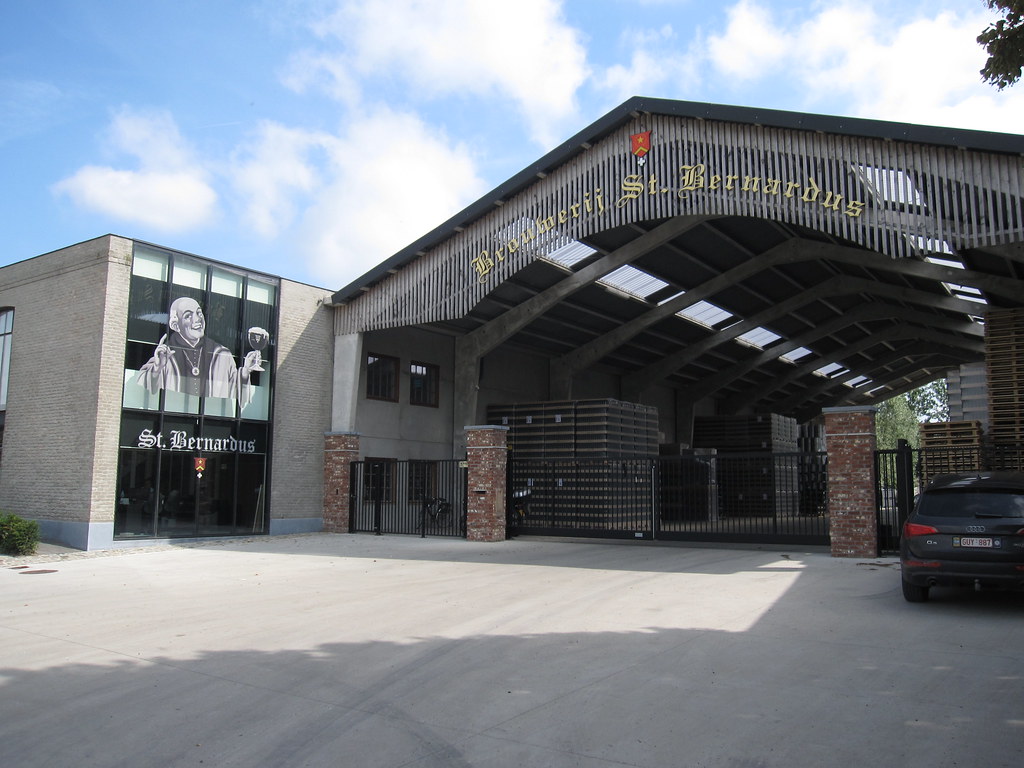
The facade of St.Bernardus brewery in Watou in 2011. This Belgian brewery is distinct from the French abbey of Mont des Cats associated with its early history.
Bernt Rostad · 4 juillet 2011 · Document source · CC BY 2.0
Discover more in our beer archives
St.Bernardus Blanche: the connection with Pierre Celis →
Pils and lager: another fermentation family →
Belgian tripel: another expression of pale beer →