Amor Vitae — three family perspectives on Lazio
In Aprilia and Lanuvio, a family moves from growing grapes to making its own wines, including Roma DOC Rosso.
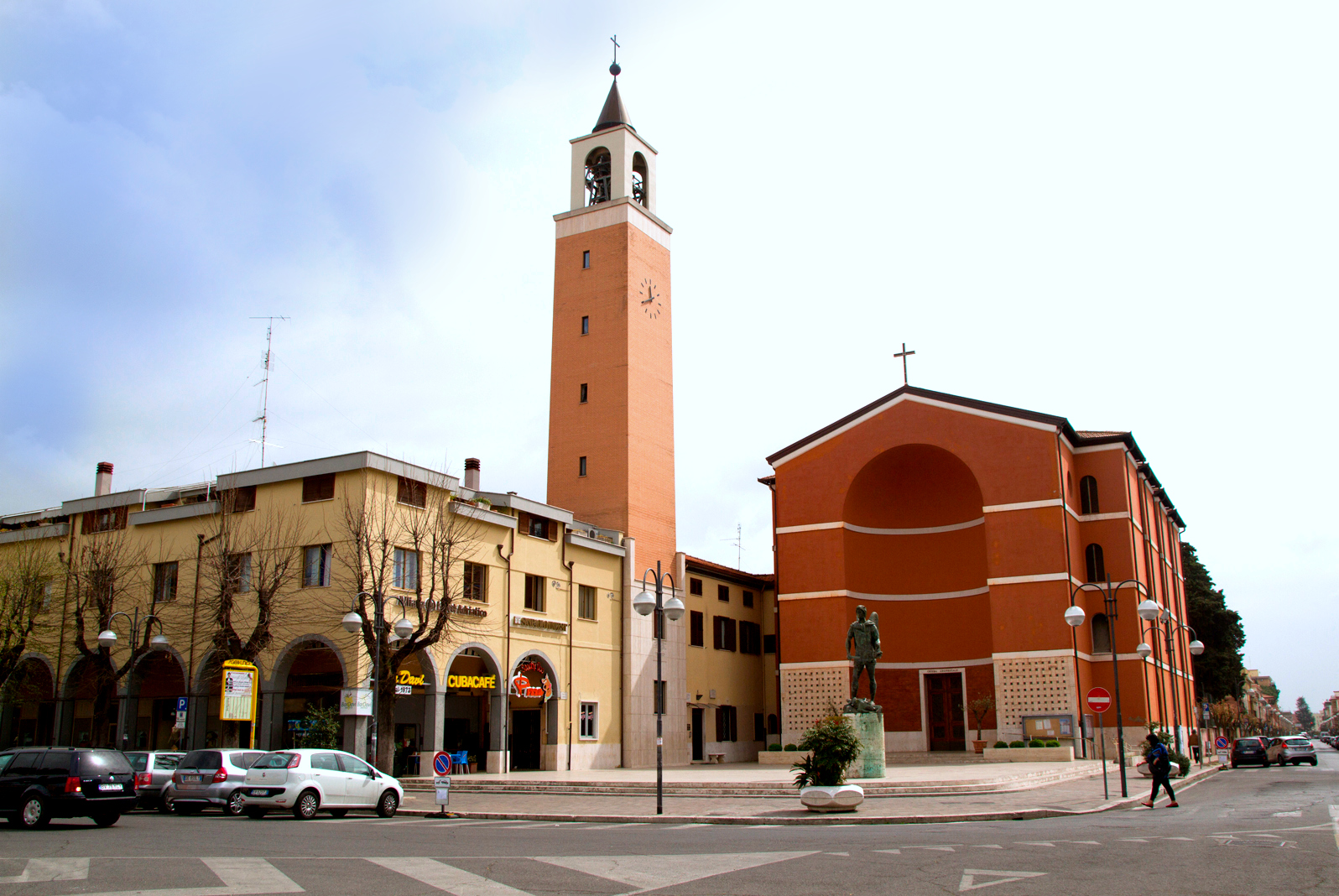
The church of San Michele Arcangelo in Aprilia, Lazio, the municipality where Amor Vitae is based. — trolvag · Original image · CC BY-SA 3.0
A family winery in Lazio
Amor Vitae is located in Aprilia, in the province of Latina, south of Rome. Virginia, Antonio and Veronica Mergè are behind the winery. Their project grew around a family property, first a place to stay, then a farm. The vines preceded the bottles: the family grew its grapes before choosing to make wine under its own identity.
This move from grape to wine was the winery’s founding episode. The two sisters and their brother gave a shared continuation to their parents’ agricultural work. Amor Vitae thus combines a recent family history with a clearly defined territory. Its proximity to Rome does not sum up its origin: Aprilia, Lazio’s land and maritime influence provide its first points of reference.
Vines between volcanic soils and sea
The Aprilia vineyard benefits from soils of volcanic origin and proximity to the coast. The varieties grown at the start of the project include Vermentino, Malvasia Puntinata, Syrah, Merlot and Cabernet Sauvignon. The winery also works with Montepulciano, Cesanese and Bellone grapes to make its wines. This range connects Lazio varieties with grapes widely found in Italy.
Another production site is documented in Lanuvio, in the province of Rome, for Cesanese. Amor Vitae’s winegrowing landscape is therefore understood through several places and wines. A desire to preserve soil fertility and biodiversity accompanies the running of the farm. This approach forms part of the agricultural project and its care for the generations who will continue it.
Roma DOC Rosso, a blend with local roots
The wine on our list carries the Roma DOC designation. Created in 2011, this appellation connects different Lazio terroirs around Rome. The name indicates a regulated winegrowing origin, beyond evoking the capital. For Amor Vitae, Roma Rosso particularly highlights Cesanese, a regional grape, in a blend of four varieties.
The documented composition is 50 % Montepulciano, 35 % Cesanese, 10 % Cabernet Sauvignon and 5 % Merlot. This wine is made in Aprilia from vines at around 150 metres above sea level. Harvesting is manual. Temperature-controlled fermentation involves pump-overs and rack-and-return, two ways of managing contact between juice and the grape’s solid parts.
Cellar work continues the agricultural work
Roma Rosso’s malolactic fermentation takes place in French barriques. Its journey then includes work on lees in steel and a rest in bottle. These stages show how a blend develops after harvest: grapes, fermentation and ageing all help define it. The range also offers whites and single-varietal wines.

Amor Vitae: documented regions, locations and grape varieties. Mapping: ISTAT boundaries, distributed by openpolis / geojson-italy, CC BY 4.0. Projection and colours adapted; a regional location map, not a cadastral map. Map boundaries · CC BY 4.0
Cesanese: two Lazio grapes behind one name →
Syrah: from the Rhône to Italian vineyards, fruit and pepper →
DOC — Denominazione di Origine Controllata →