Vermentino: a Mediterranean grape with many names
A Mediterranean grape with many names
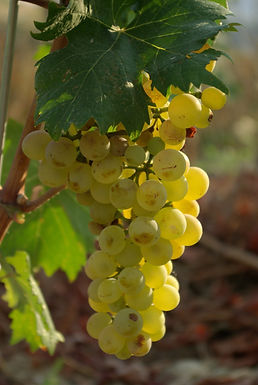
Bunches of Rolle, another name for Vermentino. Magnetto, Wikimedia Commons, CC BY-SA 3.0. · Original photograph · CC BY-SA 3.0
A history between shores
Vermentino is grown in Italy, Corsica and southern France. It belongs to a Mediterranean wine culture particularly visible in Sardinia, Liguria and Tuscany. Its exact origin remains debated. It can produce fragrant, balanced whites in warm environments, with ripeness chosen to preserve freshness.
The story: recognising the names
In France, it is known as Rolle; in Corsica, as Vermentinu. The Italian synonyms Pigato and Favorita also belong to this varietal identity, with regional selections and traditions. Different names can therefore describe several expressions of the same plant heritage. Conversely, similar names do not always establish an identity: the case of Trebbiano di Soave shows why ampelographic precision is useful.
In the vineyard
Its bunches and berries are fairly large; the grapes have a slightly elliptical shape. The vine can be vigorous and productive. It thrives in warm, dry soils, including less fertile ones, but remains sensitive to powdery mildew. Vine management, yields and harvest date help shape volume and acidity.
In the glass
Typical expressions evoke flowers, pear, apple and citrus; some bottles show more ripe fruit or herbaceous nuances. The palate can combine a fairly generous texture with a savoury finish. We appreciate this meeting of fragrance and presence, which allows us to explore several white-wine styles. Altitude, soil, climate and winemaking shape the balance.
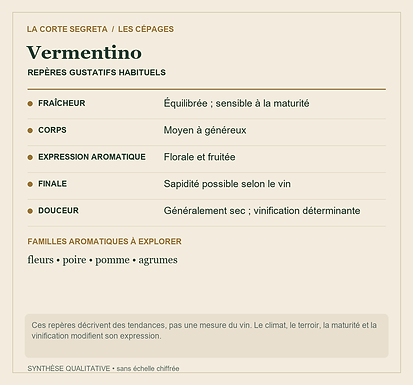
Typical flavour markers for Vermentino — a qualitative overview by La Corte Segreta. Terroir and winemaking can alter the profile.
Cantine di Dolianova: Sardinia, a work of winegrowers →
Tenuta Moraia — the Maremma behind Perpiero →
Pecorino: the return of a white from the Apennines →