Pecorino: the return of a white grape from the Apennines
The return of a white grape from the Apennines
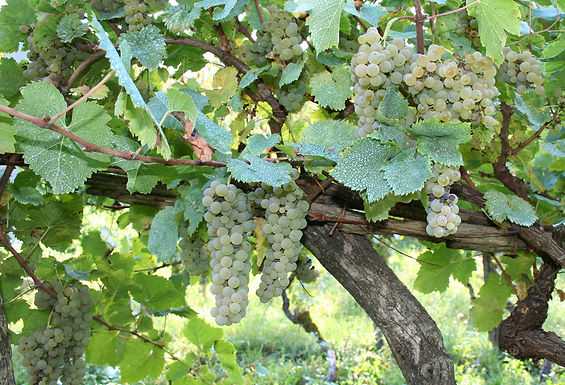
Pecorino in Arquata del Tronto: bunches and a vineyard row. Interminatispazi, Wikimedia Commons, CC BY-SA 4.0. · Original photograph · CC BY-SA 4.0
A rediscovered grape
Pecorino belongs to the vineyards of central Italy, particularly Marche and Abruzzo. Its recent history is one of rediscovery. In the early 1980s, Guido Cocci Grifoni sought traces of this grape, which had become rare. In 1982, he found plant material in the Arquata del Tronto area, at the foot of the Apennines. The first plantings intended to revive it followed. A forgotten local grape thus regained a place in white wines appreciated for their freshness and presence on the palate.
The story behind an intriguing name
Its name brings to mind pecorino, the Italian sheep’s cheese. Several stories connect the grape to sheep and seasonal migration routes; this etymology is not firmly established. What is documented, however, is the grape’s connection to the valleys and hills of the Apennines, and the work that enabled its return. At La Corte Segreta, we enjoy this story of recovered heritage: it reminds us that a great discovery can also be a rediscovery.
From vineyard to glass
Pecorino offers an interesting combination of freshness and substance. In a dry white wine, it can suggest flowers, citrus, ripe fruit and certain vegetal or herbal notes. The palate often has more volume than a merely light wine. Choosing the harvest date helps balance fruit ripeness and acidity; ageing on the lees can then enhance the texture.
Understanding the differences
The lands of Marche and Abruzzo, their altitudes and their exposures give the grape a range of expressions. One bottle may emphasise lemon and liveliness, another riper fruit and a fuller sensation. Comparing Pecorino with Vermentino reveals two different ways of combining freshness and presence. Our chart offers qualitative guidance for dry white wines.

Typical flavour characteristics of Pecorino — a qualitative overview by La Corte Segreta. Terroir and winemaking influence the profile.
Velenosi: an ambition born in the hills of Marche →
Masciarelli: Gianni’s vision for Abruzzo →
Vermentino: a Mediterranean grape with many names →