Cantine di Dolianova: Sardinia, the work of winegrowers
In Parteolla, a cooperative winery sustains several generations and several of the island’s grape varieties.
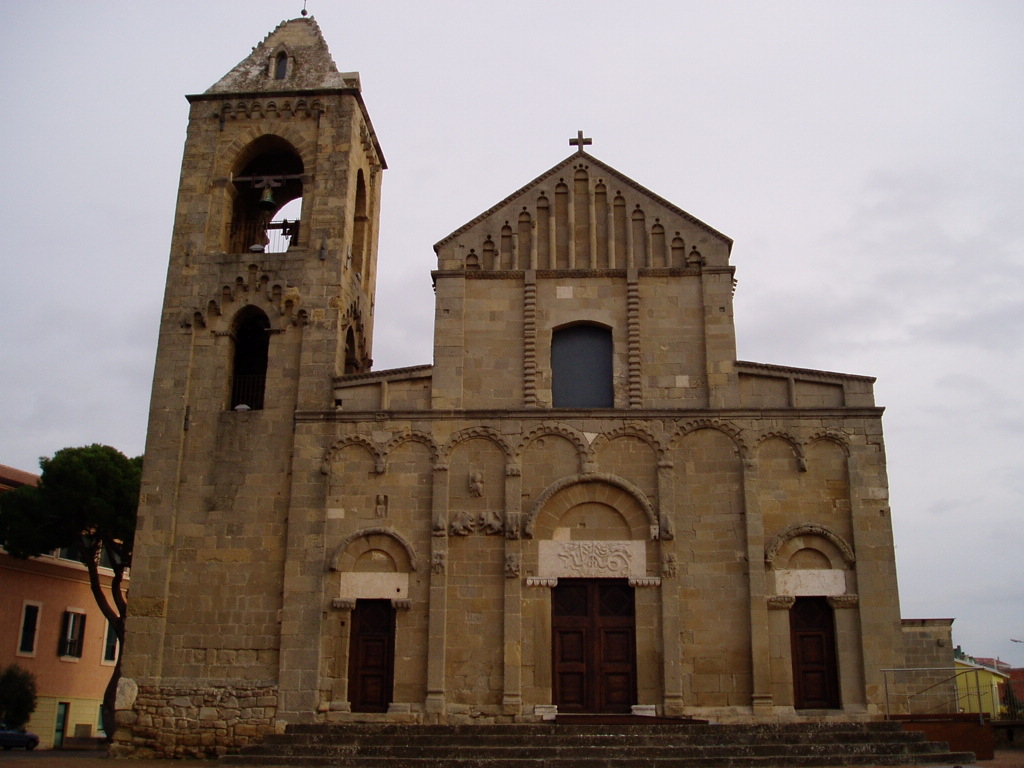
The façade of San Pantaleo, Dolianova’s former cathedral, in Sardinia. — cristianocani · Original image · CC BY 2.0
Thirty-five winegrowers, one winery
The story of Cantine di Dolianova began in 1949, when thirty-five winegrowers decided to join forces. In post-war Sardinia, they found a collective answer: sharing a winery, working together and giving their grapes a future. The name Dolianova thus became that of a community of producers. This origin matters to us: a bottle can tell a family’s story, but it can also carry the patient work of several families united.
The cooperative now brings together more than three hundred winegrowers. Among them are children and grandchildren of the founders. The vines belong to the members who bring their harvest to the winery; together, they form a collective vineyard. We value this distinction. It helps explain what Dolianova is and why its story differs from that of a single château surrounded by all its land.
Parteolla, in the south of the island
The heart of this landscape lies in Parteolla and lower Campidano, around Dolianova, Serdiana, Donori, Ussana and Soleminis. This is southern Sardinia, at the foot of hills where vines stand alongside an ancient tradition of olive growing. Summers are hot and dry; milder winters allow a Mediterranean rhythm. Clay and limestone soils contribute to these vineyards’ diversity.
This agricultural Sardinia appeals to us as much as the image of its shores. It produces wines whose names preserve the memory of the island and its grapes. Cannonau, Monica, Vermentino, Nuragus and Moscato are part of the heritage cultivated by the winery’s growers. Nasco brings yet another personality, less familiar yet deeply connected to this part of Sardinia.
Three grapes, three encounters
On our list, Anzenas explores Cannonau within the DOC Cannonau di Sardegna. The wine combines 90 % Cannonau with 10 % other indigenous red varieties. Its warm character, woodland fruit and enveloping body offer a generous expression of the island.
Prendas offers another path: a Vermentino di Sardegna made from Vermentino. Floral, fruity and fresh, it retains a lasting presence, with the slight bitter nuance that can accompany its finish. Montesicci, meanwhile, is a Nasco di Cagliari: Nasco, not Nuragus. Similar names do not describe the same wine. This bottling brings fullness, a savoury impression and a finish where almond finds its place.
A diversity we want to share
At La Corte Segreta, we like to leave several doors open within the same region. A warm red, a fresh white and a characterful white allow us to choose by more than wine colour alone. They also encourage us to remember a new name: Nasco, for example, can become the start of a discovery rather than a mysterious word on a label.

Cantine di Dolianova: documented regions, locations and grape varieties. Mapping: ISTAT boundaries, distributed by openpolis / geojson-italy, CC BY 4.0. Projection and colours adapted; a regional location map, not a cadastral map. Map boundaries · CC BY 4.0
Cannonau (Grenache): a Mediterranean grape, a Sardinian identity →
Vermentino: a Mediterranean grape with many names →
Nasco: a rare memory of Sardinian vineyards →