Carlo Gancia — the trials behind sparkling Moscato
From Narzole to Reims, then from Chivasso to Canelli. How a Piedmontese winemaker spent years learning to make Moscato sparkle.
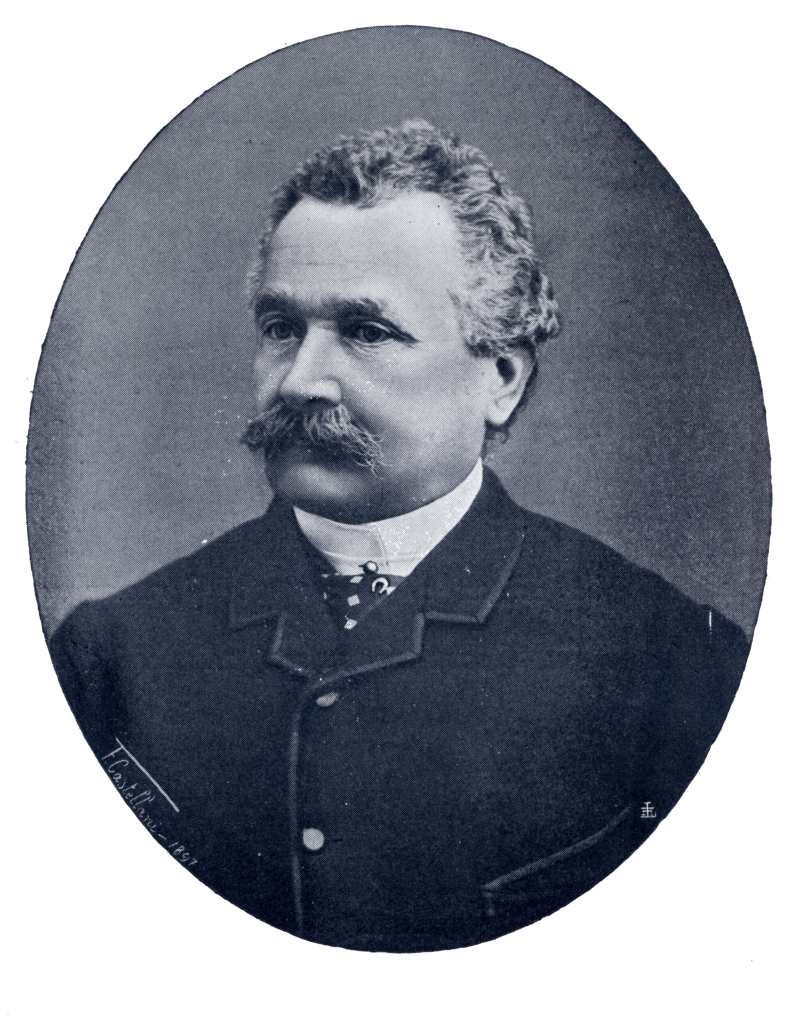
Carlo Gancia, a late nineteenth-century portrait.
Portrait photographer unidentified. Reproduction published by Vino.com. The same portrait appears in the Municipality of Canelli’s account. Original document
From Narzole to Reims
Carlo Gancia was born in 1829 in Narzole, Piedmont. He became familiar with wine through his father, who traded it. In 1847 he worked on Moscato-based vermouth at Dettoni in Turin. The next year he travelled to Reims, where he saw how Champagne acquires its bubbles in the bottle. In 1850 he set up in business with his brother Edoardo in Chivasso, a town already served by the railway.
Moscato puts the method to the test
Carlo wanted to apply what he had learned in Champagne to a Piedmontese grape, Moscato Bianco. He ran into a practical problem. Historian Patrizia Cirio, who studied the company archives, records that some bottles burst during the trials. A sugar-rich must can build up considerable pressure as it continues fermenting in a sealed vessel. According to Cirio, Gancia went back to experimenting and dropped, among other things, a syrup he could do without when working with Moscato.
What changed in 1865
The brothers moved closer to the Moscato growing areas, including Canelli. The municipality dates the recognition of Gancia’s sparkling wine to 1865. The years leading up to it are worth remembering. Someone travelled to learn a technique, then went back to the drawing board when his local grapes responded differently. A glass of Asti is an occasion to tell that story. The Moscato in the glass was already at the heart of Gancia’s experiment.
On 11 May 1866, Carlo and Edoardo moved the business to Canelli, taking over a former customs warehouse beside the railway. The Moscato hills were now close by, and the underground cellars offered space for the bottles. The tunnels would continue to be dug for decades. Carlo’s gamble had a very practical side. Each bottle needed room and time to finish its work in the cellar.
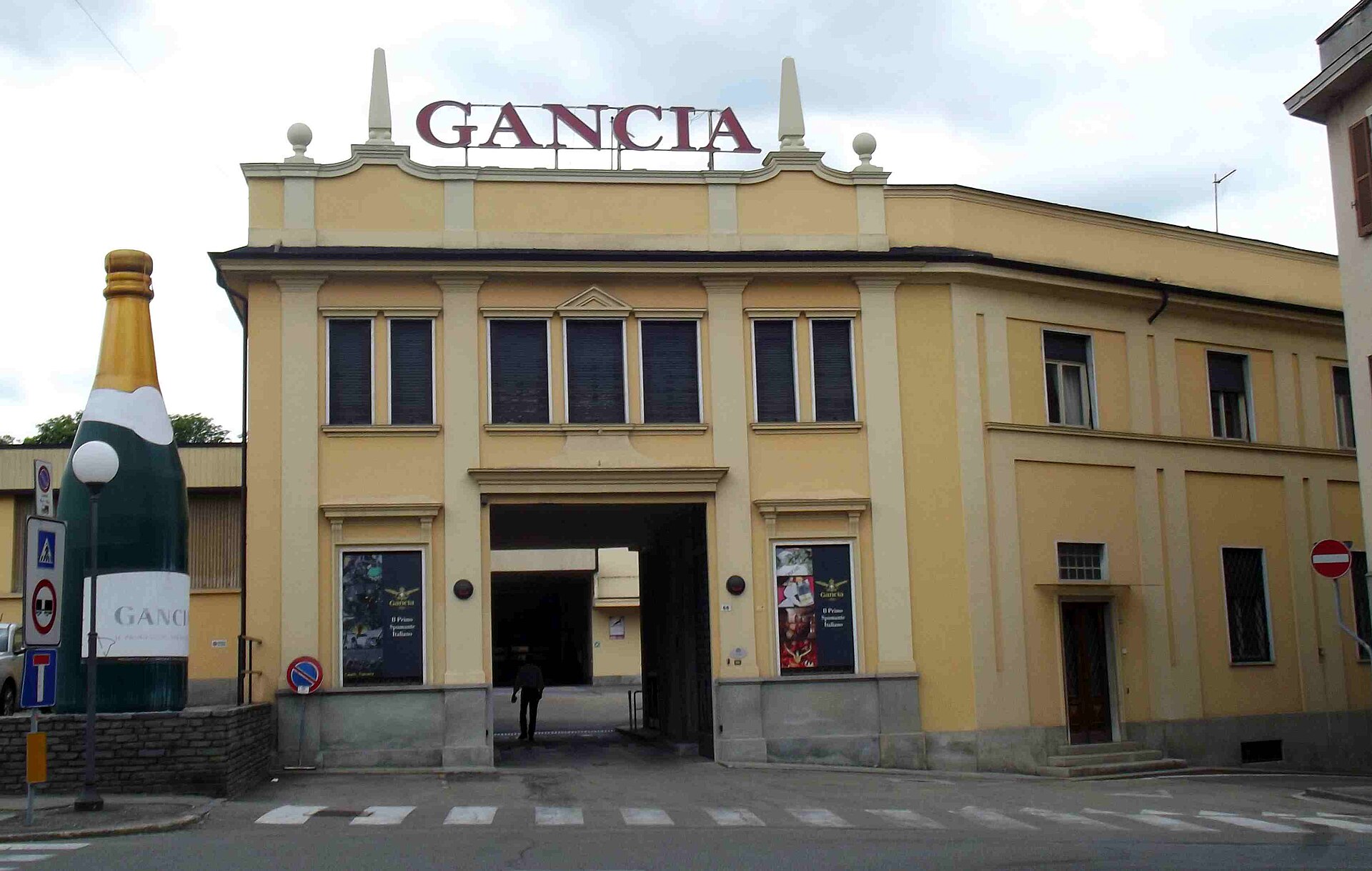
The historic Gancia works in Canelli, photographed in 2014.
F Ceragioli · CC BY-SA 3.0 · Original document · Licence
Also in our archives
Gancia · the cellars and the story of Moscato →
Federico Martinotti · another way to make sparkling wine →
Sources
Municipality of Canelli · Carlo Gancia and sparkling wine
Patrizia Cirio · research on the Italian sparkling wine archives
Visit Langhe Monferrato Roero · Gancia
Sources