Caviro: a community of growers and the cycle of the vine
Founded in Faenza in 1966, an Italian cooperative linking wine, its regions and the use of every part of the grape.
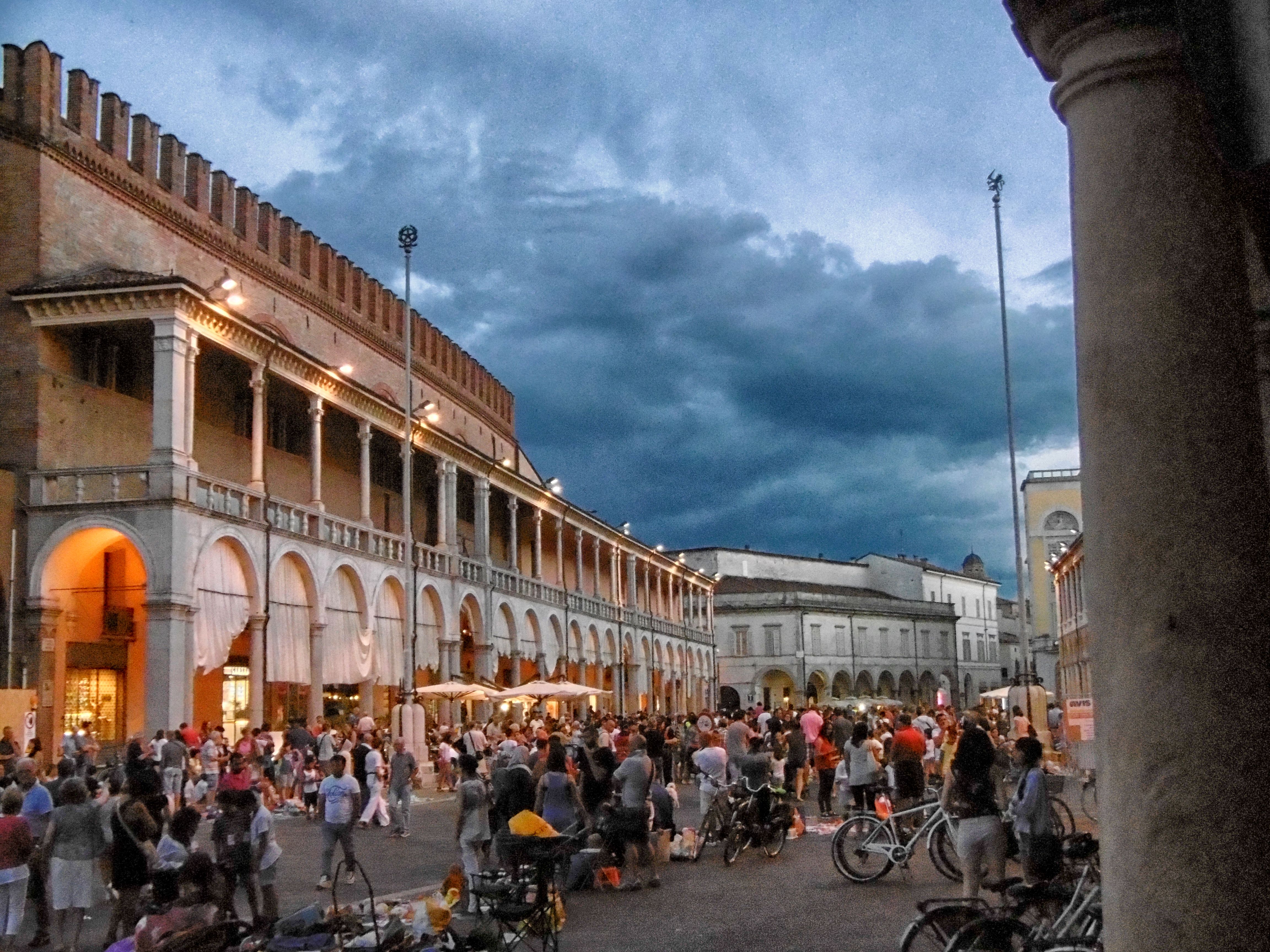
Piazza del Popolo in Faenza, the town where Caviro was founded in 1966 — Frenky9659, Wikimedia Commons, CC BY-SA 4.0. · Original image · CC BY-SA 4.0
At La Corte Segreta, Brumale leads us to Caviro and another strand of Italian wine history: cooperation. The firm was founded in Faenza, in Emilia-Romagna, in 1966. Behind its wines stands a community of growers and cooperative wineries. We also enjoy considering this dimension of wine: the people who grow it, the organisations that bring them together and the ways they sustain a region.
Nine wineries and a practical need
Initially, nine cooperative wineries in Romagna joined forces. They wanted to get more value from their members' work and the by-products of winemaking. The pomace left after pressing posed a very practical question. The founders decided to build a shared distillery so they could process these materials themselves and give them value.
The facility was built in Faenza, then in open countryside, and inaugurated in 1969 after three years of construction. This episode particularly interests us: the story begins with an everyday difficulty, followed by a collective response. The grape's cycle does not end with juice and a bottle. It also includes what remains after winemaking, with new possible uses.
A vineyard belonging to thousands of people
Today, the network brings together around 11 500 growers and 36 200 hectares across eight regions: Piedmont, Veneto, Emilia-Romagna, Tuscany, Marche, Abruzzo, Puglia and Sicily. These hectares form the network's vineyard base; they are not a single property owned by Caviro. Growers deliver their grapes to their wineries, which then participate in the collective work.
The headquarters are in Faenza, with a major production and packaging site in Forlì. Supplies include members' deliveries and additional purchases on the market. This organisation connects several Italian origins, with wines retaining their regional, varietal and appellation references. A large network also requires a clear distinction between where the vines grow and where the winery stands.
The material continues its journey
Making use of residues remains a distinctive feature of Caviro. Pomace and lees can yield alcohol and tartaric acid; other materials feed energy production or return to the land as fertilisers. This approach continues the founders' intuition: use more of what the vine provides, with suitable outlets for each material.
Brumale on our list
The Brumale range belongs to Caviro and tells the story of several Italian regions. Our Brumale Appassimento expresses Romagna's Sangiovese, with the Rubicone designation indicating its geographical origin. Sangiovese is the grape variety; Rubicone locates the wine. The IGT designation helps explain this indication of origin.
Its generous fruit and supple texture bring a different expression to our selection of reds. We keep a place for its approachable character and for the human story behind it. Caviro tells of an Italy where growers come together, regions retain their identities and the grape can follow several paths after harvest.

Caviro: documented regions, locations and grape varieties. Mapping: ISTAT boundaries, distributed by openpolis / geojson-italy, CC BY 4.0. Projection and colours adapted; a regional location map, not a cadastral map. Map boundaries · CC BY 4.0
Sangiovese: a common thread through central Italy →
IGT — Indicazione Geografica Tipica →
Grappa and spirits: the grape in another form →
Grape drying · When grapes lose their water →