Chardonnay: one grape, from taut whites to great sparkling wines
One grape, from taut whites to great sparkling wines
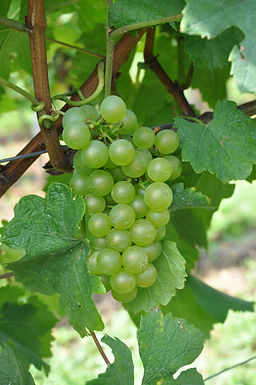
Doris Schneider, Julius Kühn-Institut (JKI), Federal Research Centre for Cultivated Plants, Institute for Grapevine Breeding Geilweilerhof, 76833 Siebeldingen, Germany · Original photograph · Reproduction authorised by JKI/VIVC with source attribution
Burgundy and an unexpected family
Chardonnay is associated with Burgundy, but it has found a place in a great many vineyards, including those of Italy. The village of Chardonnay in the Mâconnais is thought to have given the grape its name. Genetic analysis revealed another story: it descends from a Pinot and Gouais Blanc. The latter helped give rise to several important varieties.
In the vineyard
The berries turn golden yellow when ripe and form often compact bunches. Early budbreak leaves the vine susceptible to spring frosts. Chardonnay adapts to varied soils and climates, but yields, exposure and water availability change the grape’s balance. A cool vineyard generally preserves more tension; greater ripeness opens up other expressions. Comparison with Pinot Blanc is interesting: the two were long confused, but they are distinct varieties.
In the glass
In fresh versions, we may find apple, lemon and white flowers. A riper palate or ageing on the lees can add volume. Malolactic fermentation and barrel ageing can bring creamy, hazelnut or vanilla impressions: these describe the work on the wine, not an aroma imposed on every Chardonnay. Unoaked expressions also exist, precise and delicate.
A grape that changes form
Chardonnay produces still whites and is also an important base for sparkling wines. At La Corte Segreta, we enjoy this diversity: the grape name opens a path, but the region and method matter just as much. Discovering Pinot Noir also helps explain how grapes of different colours can end up in white sparkling wines.
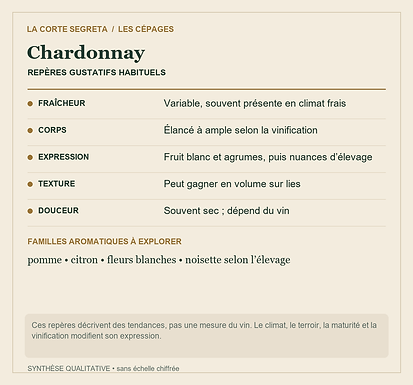
Typical flavour characteristics of Chardonnay — a qualitative overview by La Corte Segreta. Terroir and winemaking influence the profile.
Ferrari: mountain bubbles and the bottles that were saved →
Pinot Noir: red fruit, finesse and the surprise of white sparkling wines →
Lo Chardonnay: the grape meets oak →