Pinot Noir: red fruit, finesse and the surprise of white sparkling wine
Red fruit, finesse and the surprise of white sparkling wine
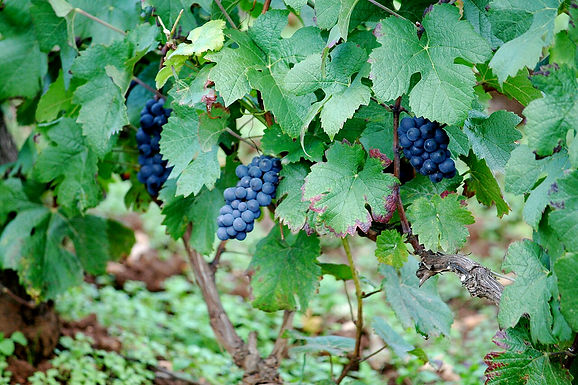
Megan Mallen · Original photograph · CC BY 2.0
An ancient Burgundy grape
Pinot Noir is a great historic grape of Burgundy, also important in Champagne. Its name is linked to the shape of its bunches, which can resemble a pine cone. It has travelled to many vineyards; in Italy, it appears as Pinot Nero. This spread has not created a single style: climate and terroir strongly alter the wines’ colour, fruit and balance.
A demanding vine
The bunches are fairly small and compact, with dark berries and relatively thin skins. Budbreak and ripening are relatively early. Moisture within the bunches can encourage rot, making canopy management and site choice essential. Heat and ripeness also change its expression. Mutations in this ancient family have notably given rise to Pinot Blanc and Pinot Gris. A change in skin colour can therefore accompany a close genetic relationship.
A dark grape can produce white wine
Its flesh and juice are not naturally red. A red wine’s colour comes mainly from contact with the skins during winemaking. Pressing the grapes without seeking that maceration can produce white wine from Pinot Noir: this is the principle behind blancs de noirs. The discovery often surprises people and explains its role in some sparkling wines alongside Chardonnay.
In the glass
The reds can suggest cherry, raspberry and other red fruits, sometimes flowers or spices. Fine tannins and a subtle colour can accompany considerable character. Age can reveal woodland undergrowth nuances. At La Corte Segreta, we enjoy this ability to bring together precision, aroma and freshness.
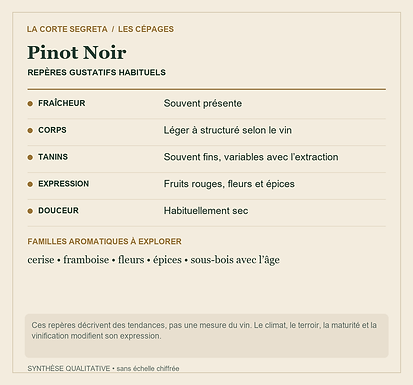
Typical flavour characteristics of Pinot Noir — a qualitative overview by La Corte Segreta. Terroir and winemaking influence the profile.
Chardonnay: one grape, from taut whites to great sparkling wines →
Pinot Blanc: a Pinot mutation, long confused with Chardonnay →
Dom Pérignon — two vintages, the passage of time in Champagne →