Dom Pérignon — two vintages, the passage of time in Champagne
From Hautvillers Abbey to the 2012 and 2013 vintages, a French producer built on blending and patience.
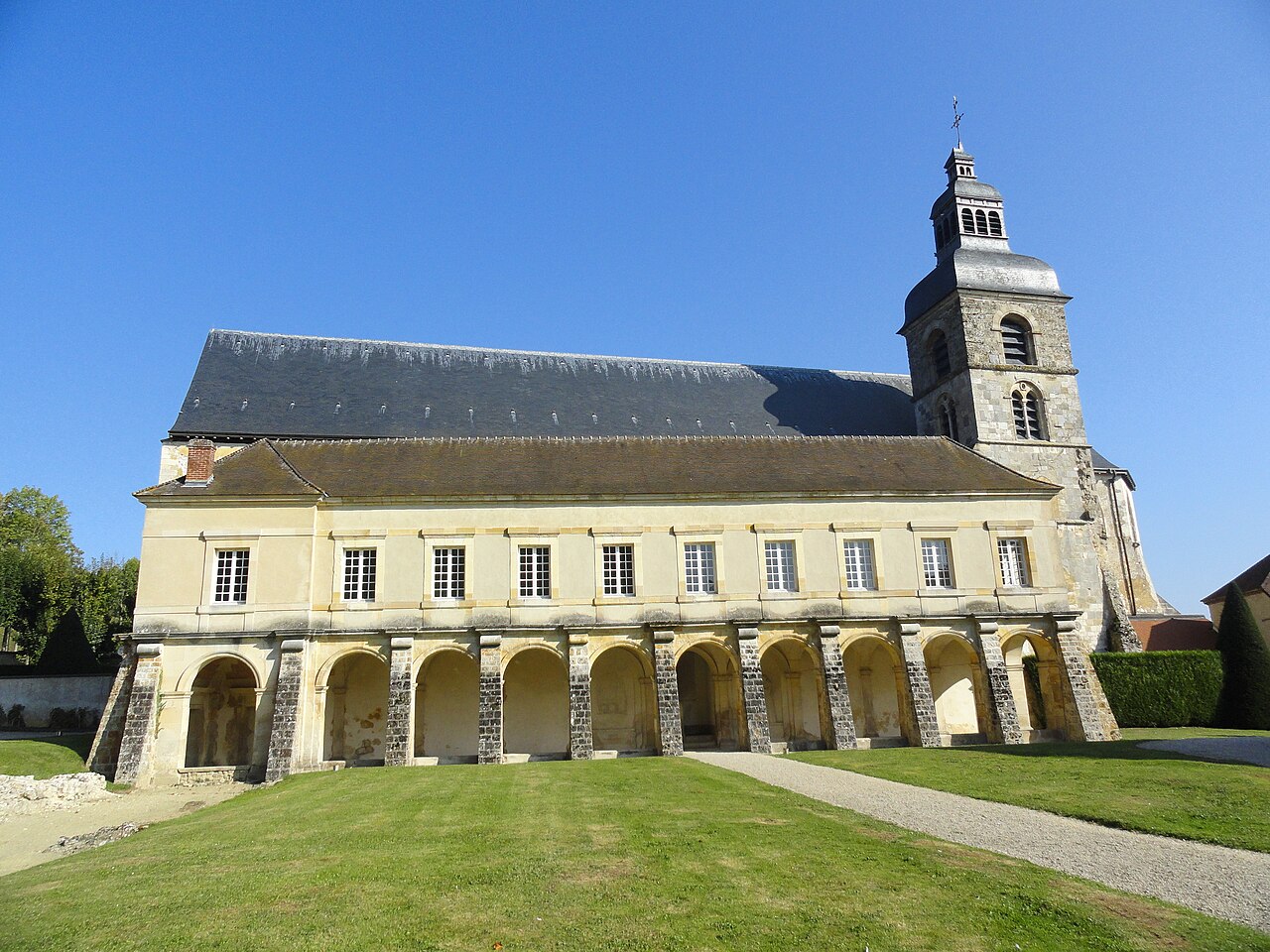
The former Hautvillers Abbey: cloister and abbey church, in the Marne, Champagne. — October Ends · Original image · CC BY-SA 3.0
A Champagne house
Dom Pérignon takes us to France, to the vineyards of Champagne. The house belongs to Moët Hennessy within the LVMH group, and its modern history is connected to Moët & Chandon. The cuvée has existed since 1936. Its name honours a much earlier figure, the Benedictine Pierre Pérignon, whose work influenced Champagne’s wine culture.
In 1668, Dom Pierre Pérignon became cellarer at Hautvillers Abbey near Épernay in the Marne. He devoted a large part of his life there to wine. His contribution notably concerned the pursuit of quality blends and careful pressing. He contributed to a collective history in a region where mastery of effervescence developed gradually.
Hautvillers and the art of blending
Hautvillers Abbey remains an essential historical landmark. The Dom Pérignon name preserves the memory of selection, precision and the pursuit of harmony between different grapes. The present house gives this idea a particular form: every cuvée is vintage-dated and combines wines from a single harvest year.
Chardonnay and Pinot Noir form the blends. The first is a white grape; the second bears dark grapes whose juice can also make white Champagne through pressing. Champagne’s crus bring their differences to the whole. For 2012, the house notably places Chouilly alongside Le Mesnil-sur-Oger, Hautvillers alongside Mailly, and Aÿ alongside Bouzy.
The long passage of time in the bottle
The bubbles arise from a second fermentation in the bottle, followed by a long rest on lees: this is the principle of the traditional method. At Dom Pérignon, the first Vintage expression takes at least eight years to prepare. Other expressions, such as the second plénitude, extend this maturation further. Time thus becomes a component of the wine, alongside the grapes and blending.
The creation of each vintage continues under the cellar master’s responsibility. Vincent Chaperon succeeded Richard Geoffroy in 2019, after many years working together. This handover maintains continuity while allowing each year its individuality. The date on the bottle therefore remains the first element in understanding the cuvée.
2012 and 2013, two different years
In 2012, frost, rain, hail and flowering difficulties preceded a more favourable ripening period, supported by hot, dry weather. The harvest produced a vintage built around contrasts. Chardonnay and Pinot Noir find complementary places in it, which the blend seeks to unite in a single expression.
In 2013, the season stood out for longer ripening and a late harvest. This timing gave the grapes, then the cellar work, a different context. The two vintages on our list let us follow successive years in a house that places the vintage at the heart of its identity.

Dom Pérignon: a diagram of the documented locations and two grape varieties. Created by La Corte Segreta; a thematic representation of the crus mentioned for 2012, without geolocation of individual plots.
Traditional method: bubbles born in the bottle →
Chardonnay: one grape, from taut whites to great sparkling wines →
Pinot Noir: red fruit, finesse and the surprise of white sparkling wine →