Traditional method: bubbles born in the bottle
The history of Metodo Classico, bottle fermentation and the wines at La Corte Segreta.
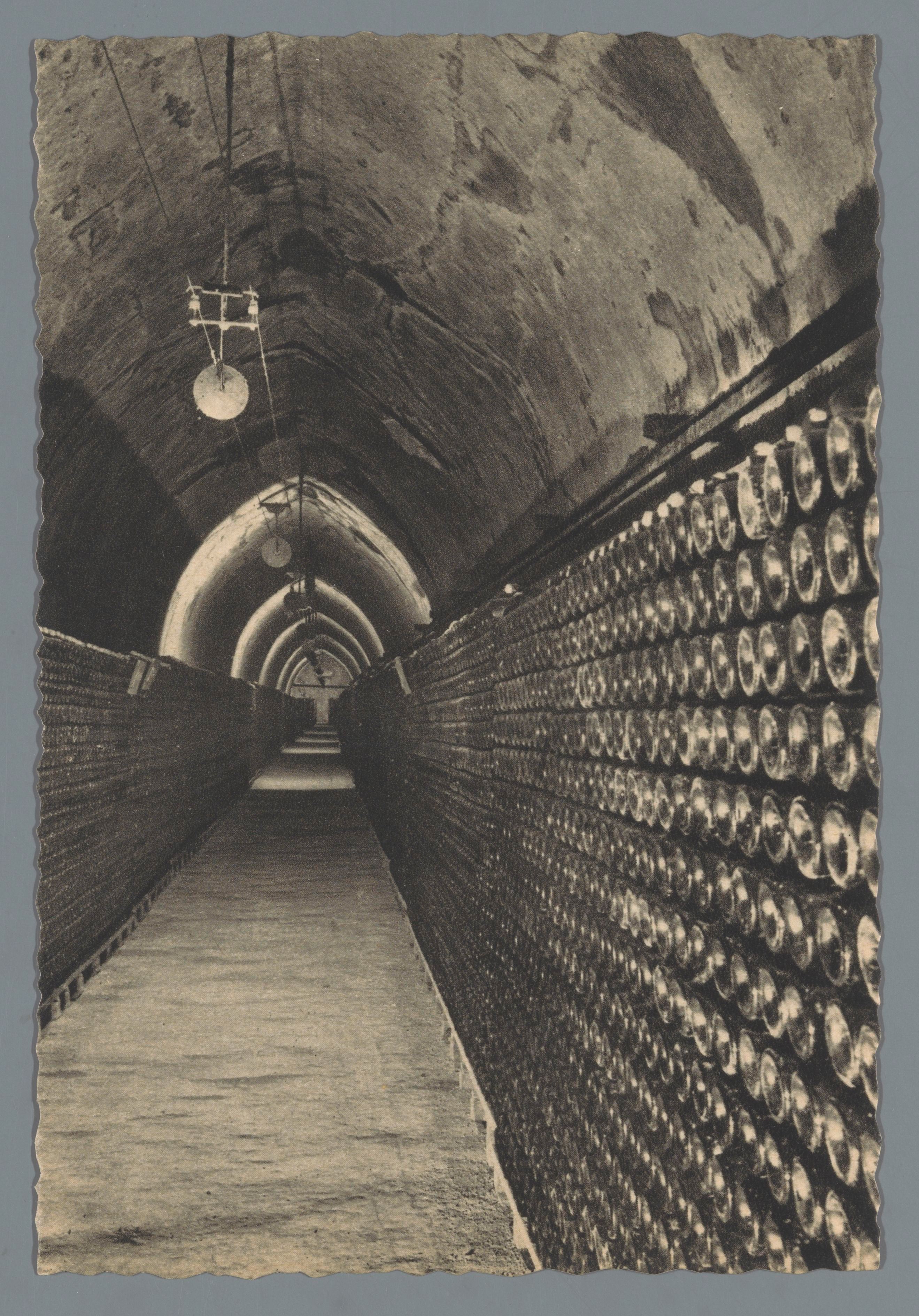
Historical illustration: a gallery of bottles ageing in horizontal stacks in the Pommery cellars in Reims, a postcard held by the Rijksmuseum, collection RP-F-F19887. Wikimedia Commons, public domain / CC0.
Fine bubbles, a creamy texture, the scent of bread crust or brioche: traditional-method wines develop in the bottle, in contact with the yeast. In Italy, this process is known as Metodo Classico.
A history shaped by cellars and time
The method developed gradually, particularly in Champagne. Between the late 17th and early 18th centuries, producers sought to create effervescence deliberately. Advances in glassmaking and closures, followed by control over sugar quantities, riddling and disgorgement, made the process more precise. Dom Pierre Pérignon played a role in improving blends and wine quality; this history brings together many skills accumulated over generations. Historical milestones presented by the Comité Champagne.
Italy also adopted this expertise. After studying in Reims, Carlo Gancia created a Moscato spumante in 1865 using the traditional method. This milestone forms part of the history of Italian sparkling wine. The Asti Gancia we serve today uses a different process, the Martinotti method. The history of Gancia.
How wine becomes sparkling
The base wine. A first fermentation turns grape juice into still wine. Wines can then be blended to create the cuvée.
The second fermentation in the bottle. At tirage, a liqueur containing sugar and yeast is added to the wine. A second fermentation begins in each sealed bottle. The carbon dioxide remains trapped and dissolves in the wine: this is how the bubbles are born. Tirage and the second fermentation.
Ageing on the lees. The wine rests in contact with the yeast from this fermentation. Changes in the yeast, together with the wine’s slow evolution, enrich its texture and aromatic range. Depending on the cuvée and its ageing, notes of bread, brioche or dried fruit and nuts can develop. The role of ageing on the lees.
Riddling and disgorgement. The bottles are gradually tilted and turned to gather the sediment in the neck, then the sediment is expelled. The wine receives its finishing touches and final cork. Riddling and disgorgement explained by the Comité Champagne.
How it differs from Martinotti
The main difference is where the effervescence develops: in the bottle here, and in the tank in the Martinotti / Charmat method. Ageing on the lees has a central role in our traditional-method wines. Their texture and aromas bear the mark of time, while our tank-fermented wines place greater emphasis on fresh fruit and flowers. Two ways of creating bubbles, offering different sensations.
Wines on our list made by bottle fermentation
Ferrari Brut — Trento DOC. The traditional method brings out the qualities of mountain-grown Chardonnay: apple, flowers, a hint of bread crust and freshness. Ferrari Brut factsheet.
Ferrari Perlé Brut — Trento DOC. A Chardonnay cuvée aged on the lees, with a fine texture and delicate length. Ferrari’s Perlé collection.
Giulio Ferrari Riserva del Fondatore — Trento DOC. Chardonnay and a long rest on the yeast shape this reserve, in which precise bubbles accompany great aromatic depth. Ferrari’s presentation of the reserve.
Cuvée Royale — Marchese Antinori, Franciacorta DOCG. Made at Tenuta Montenisa with a second fermentation in the bottle, it combines white peach, bread crust and yeast notes on a creamy palate with persistent bubbles. Antinori factsheet.
Dom Pérignon 2012 and Dom Pérignon 2013 — Champagne. These two vintages on our list belong to the Champagne tradition: a second fermentation in the bottle and long ageing in contact with the yeast. The producer makes time a central part of creating its cuvées. Dom Pérignon’s ageing process.
Ferrari: mountain bubbles and the bottles that were saved →
Dom Pérignon — Two vintages, the time of Champagne →
Martinotti: bubbles born in the tank →
