Antinori: six centuries and the courage to pass on a legacy
A Florentine family, twenty-six generations and lands with distinct identities.
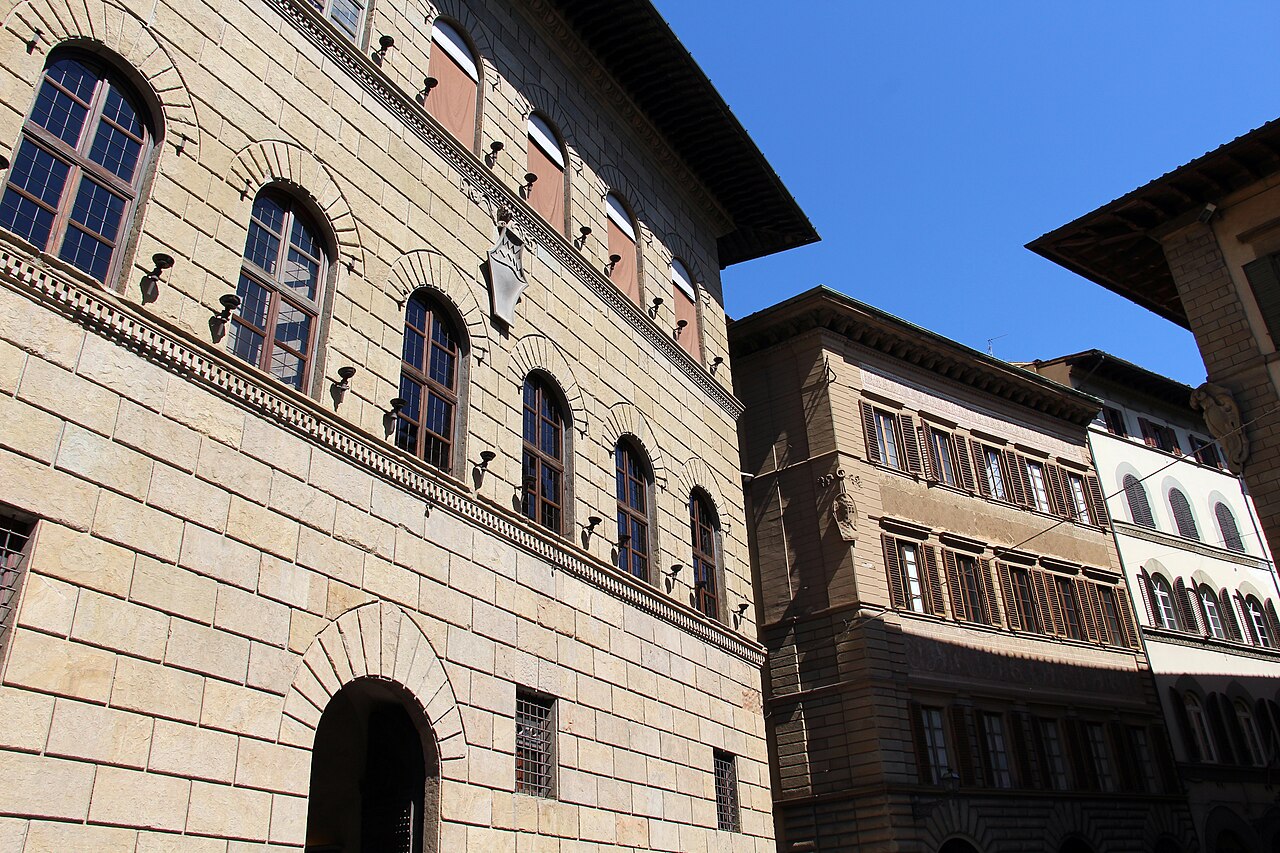
Palazzo Antinori, Florence — Fred Romero, 2018 / Wikimedia Commons, CC BY 2.0.
At La Corte Segreta, some producers interest us for what they put in the glass. Antinori also fascinates us for what lies behind its name. A family, more than six centuries connected to wine and twenty-six generations: this longevity makes us reflect on what it means to inherit a legacy, then find the courage to pass it on.
On a list devoted to Italian wines, this family simply had to be included. We love its wines, but also the way its history connects Tuscany, the culture of the table and sometimes momentous human decisions.
1385: the beginning of an unbroken thread
In 1385, Giovanni di Piero Antinori joined the Arte Fiorentina dei Vinattieri, the Florentine guild of wine merchants. This historical milestone marks the family’s commitment to the world of wine. Since then, twenty-six generations have sustained the business.
Palazzo Antinori in Florence became part of the family’s heritage in 1506, when Niccolò di Tommaso Antinori bought it. The palace gives this story a tangible presence. Behind the name on a label are also walls, memories and a place passed down for centuries.
Developing the wine while keeping the name
With Piero Antinori, the producer took a major role in the renewal of Tuscan wines. The first vintage of Tignanello, in 1971, became one of the great symbols of this desire to experiment. Family tradition does not prevent new paths being tried: it also gives a reason to demand more of the wine.
The day the palace became collateral
The episode that most struck us took place in the early 1990s. In the 1980s, Piero Antinori had partnered with the British group Whitbread, notably to acquire his brother’s and sister’s shares. A few years later, he wanted to buy back his partner’s shares to restore full family ownership of the company.
In 1991, this buyback led him to borrow from Mediobanca. To finance the transaction, he pledged his personal assets, even putting up the historic family palace as collateral. The place bought by an ancestor in 1506 thus became tied to the success of a decision taken almost five centuries later.
We appreciate what the decision represented: accepting considerable personal risk so that the family story could continue under its own name. The debt would be repaid before the end of the century. His three daughters, Albiera, Allegra and Alessia, then continued this legacy as part of the twenty-sixth generation.
This is also what we enjoy when opening a Villa Antinori Rosso. An accessible bottle can carry an immense history. We choose it first because we like the wine; knowing the family behind it adds another depth to the pleasure of sharing it at the table.
The lands: several regions, several identities
Antinori’s geography begins in Tuscany. In the heart of Chianti Classico, Tenuta Tignanello grows Sangiovese, Cabernet Sauvignon and Cabernet Franc on limestone and schist hills at around 350 to 400 metres. There is also a small place for white grapes destined for Vin Santo. At Guado al Tasso, near Bolgheri, Cabernet Sauvignon, Merlot, Cabernet Franc, Syrah and Vermentino form another landscape, shaped by alluvial soils and the sea’s influence.
In Umbria, Castello della Sala near Orvieto works with varieties including Grechetto, Procanico, Chardonnay, Sauvignon Blanc, Sémillon, Pinot Bianco, Viognier, Riesling and Traminer, as well as a small amount of Pinot Nero. This is the estate behind our Muffato della Sala: the link between a wine and its land becomes particularly clear here.
In Lombardy, Tenuta Montenisa around Calino near Lake Iseo is devoted to Chardonnay, Pinot Nero and Pinot Bianco for Franciacorta. The vines around Villa Maggi have formed the heart of this production since 1999. They notably produce our Cuvée Royale, whose second fermentation follows the traditional method.
The Italian presence also includes the Chianti Classico estates Badia a Passignano and Pèppoli, Pian delle Vigne in Montalcino, Le Mortelle in Maremma, La Braccesca between Cortona and Montepulciano, Aldobrandesca in Sovana and Monteloro near Fiesole. This last site, at around 500 metres, mainly explores Riesling and Pinot Bianco. Piedmont is represented by Prunotto; Puglia by Tormaresca and Tenuta Bocca di Lupo.
We show the main locations on the map below. It locates estates and winegrowing areas; it does not draw individual plots or claim to summarise all the family’s international holdings. At La Corte Segreta, this diversity interests us because it explains how the same family can produce a Tuscan red, a sweet white from Umbria or Franciacorta bubbles, with profoundly different characters.
Tignanello, another expression after the meal
The spirit of Tignanello also accompanies us after the meal. Grappa Tignanello is a clear grappa, made from Tuscan pomace distilled promptly to preserve its aromatic expression. The finest batches are selected and blended before bottling. It continues our discovery of Antinori in another form: a clean, floral, ample spirit, offered on our liqueur list.
This adventure continues in the history of Super Tuscans, which helped change perceptions of Italian winemaking expertise.
Muffato della Sala also opens the door to noble rot, a fascinating transformation of the grape that requires observation and patience.

Antinori: documented regions, locations and grape varieties. Mapping: ISTAT boundaries, distributed by openpolis / geojson-italy, CC BY 4.0. Projection and colours adapted; a regional location map, not a cadastral map. Map boundaries · CC BY 4.0
Tignanello: the courage to change Tuscan wine →
Villa Antinori Rosso: one of the owner’s favourites →
How to read a wine label · Villa Antinori Rosso as an example →
Villa Antinori Rosso, the villa on the label →
People in this story
Niccolò Antinori — from the villa to the ruined cellars →