Noble rot: the grape’s strange alchemy
Botrytis cinerea, patient harvesting and sweet wines
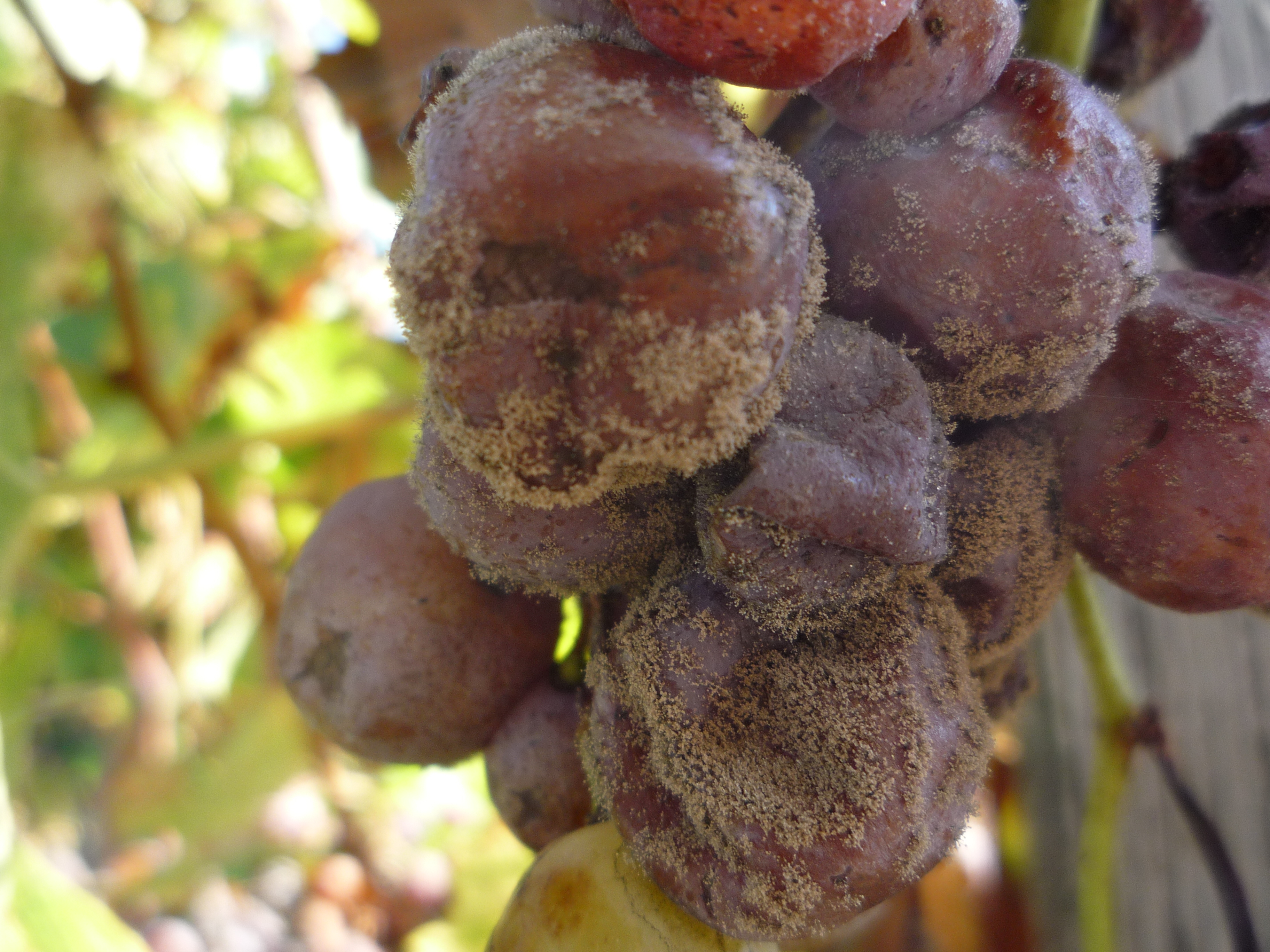
Sémillon bunches affected by noble rot in the Sauternes area — John Yesberg, Wikimedia Commons, public domain. · Original photograph
A transformation before the glass
The name ‘noble rot’ seems to combine two opposing ideas. Yet some of wine’s great sweet expressions begin this way: a ripe grape, a microscopic fungus and a climate that allows them to meet. At La Corte Segreta, Muffato della Sala opens this door for us. This wine from Antinori, born at Castello della Sala in Umbria near Orvieto, invites us to discover what happens to the bunch before harvest.
The same fungus, two outcomes
The organism responsible is called Botrytis cinerea. It also causes grey rot, feared in vineyards. The ‘noble’ form depends on its development on perfectly ripe, healthy grapes under favourable conditions. If humidity persists, the berries can deteriorate and the harvest become unsuitable for the intended wine.
In the right conditions, the story changes. Morning mists encourage the fungus to establish itself; afternoon sunshine and air then allow the grapes to dry. This alternation is essential. The art lies in guiding a fragile phenomenon, then deciding when to pick.
What happens to the grape
The fungus alters the berry’s skin, making it more permeable. Water gradually evaporates: the grape shrivels and the substances it contains become concentrated. Its colour shifts from gold to brown, sometimes dark purple. The desired berry no longer looks fresh and smooth.
But it is not simply a matter of removing water. Botrytis itself uses some of the sugars and transforms certain grape components. Final concentration can increase despite this consumption because water loss is significant. Acids also develop: a successful wine must retain freshness capable of supporting its sweetness. The fuller texture is notably linked to glycerol, whose presence increases with the fungus’s activity.
Aromas born of transformation
Botrytisation also changes the berry’s metabolism and the compounds contributing to the wine’s aromas. It therefore affects aromatic identity beyond concentration alone. Depending on grape, site and cellar work, the glass may suggest dried apricot, pineapple, ripe pear, candied citrus or honey.
These words are tasting pointers: they do not describe added ingredients. Success rests on their precision and the balance of the palate. Lasting sweetness takes on another dimension when acidity gives it energy. The wine remains lively in the glass, with nuances following one another.
Harvesting the same vines several times
The berries do not all change at the same moment. One bunch can contain berries ready to pick, others still healthy and some that must be discarded. Pickers therefore return to the plots: these selective passes are known as tries successives. Each time, they take only grapes that have reached the desired stage.
This slow process partly explains the rarity of these wines. The grapes have lost water, selection removes part of the harvest and repeated passes multiply the work. After harvesting come careful transport, pressing, fermentation and ageing: precision continues all the way to the bottle.
A European history, long before any single accident
Wines from botrytised grapes belong to several European histories. In Tokaj, Hungary, an inventory of the Garay family already mentioned an Aszú wine on 15 May 1571. In 1655, a law governed the selection of aszú berries during harvest. These traces remind us that seeking shrivelled, concentrated grapes is part of an ancient craft.
In the Sauternes area, an account from 1741 described very late harvesting, carried out in several passes to obtain greater sweetness. The famous stories of owners returning too late to harvest in the 19th century remain lovely local legends; they do not provide a single invention date for noble rot.
The courier who arrived too late
One of the most striking stories took place at Schloss Johannisberg, in the Rheingau, in 1775. The start of harvest then depended on permission from the abbot of Fulda. The courier returned two weeks late; the exact reason for this delay remains unknown. During the wait, the grapes ripened further and Botrytis established itself.
Harvest finally took place despite concerns about the berries’ appearance. The following spring, the wine revealed unexpected richness. This episode became foundational in the estate’s history of late harvesting. It tells of a decisive local discovery without erasing the older traditions of Tokaj or other vineyards.
Muffato’s Italian expression
Muffato della Sala appeared in 1987. Its blend has evolved; today it combines Sauvignon Blanc, Grechetto, Traminer, Sémillon and Riesling. Castello della Sala’s autumn mists allow ‘muffa nobile’ to develop. The grapes are hand-picked in several passes, then selected again in the cellar.
At La Corte Segreta, we enjoy this story because it shows how much a wine can depend on observation and patience. Behind Muffato’s sweetness, we find a fragile balance between climate, grape and human touch. Noble rot thus gives us another way to look at the vine: an unexpected transformation that became an art of precision.
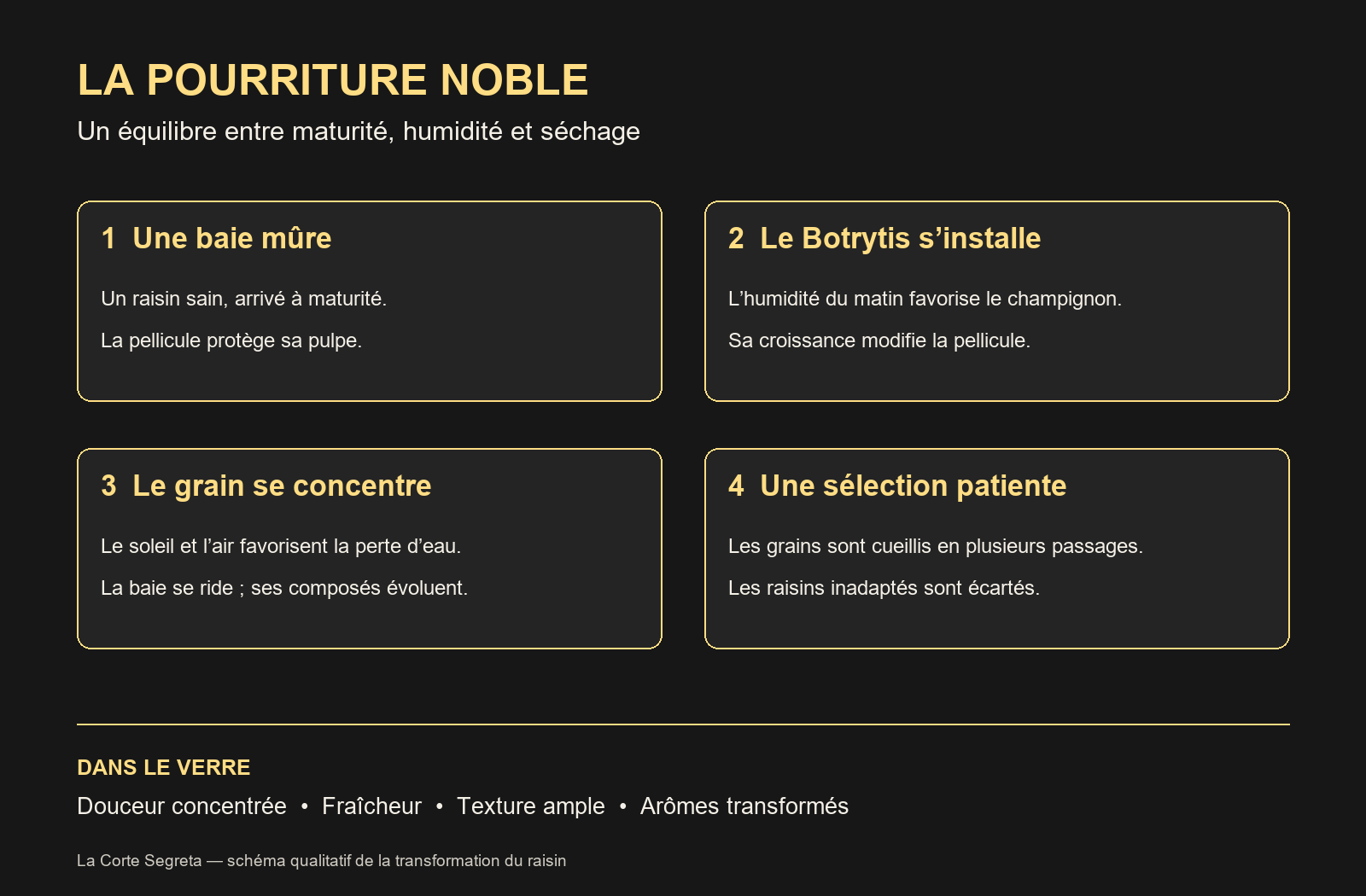
A diagram of noble rot: from ripe berry to grape selection — La Corte Segreta.
Sémillon: from dry whites to grapes concentrated by noble rot →
Sauvignon Blanc: expressive freshness and a red-grape relative →
Riesling: freshness across styles and years →
Grape drying · When grapes lose their water →