Pinot Blanc: a Pinot mutation long confused with Chardonnay
A Pinot mutation long confused with Chardonnay
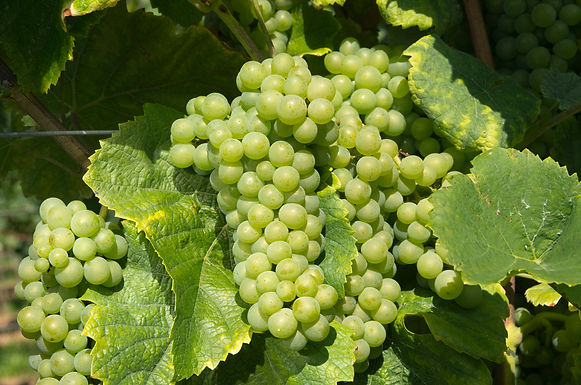
Ursula Brühl, Julius Kühn-Institut (JKI), Federal Research Centre for Cultivated Plants, Institute for Grapevine Breeding Geilweilerhof, 76833 Siebeldingen, Germany · Original photograph · Reproduction authorised by JKI/VIVC with attribution to the source
Another colour in the Pinot family
Pinot Blanc belongs to the Pinot Noir family, of which it is a colour mutation. It is known as Pinot Bianco in Italy and Weissburgunder in German-speaking regions. Its Italian vineyards are found notably in Trentino, Alto Adige and other northern regions. Close family ties do not prevent different expressions: a pale skin opens up another approach to winemaking.
The long confusion with Chardonnay
Pinot Blanc and Chardonnay were long confused. At the end of the 19th century, observations in Burgundy's vineyards and a congress in Châlons in 1896 helped clarify the distinction. This history shows how identifying vines required careful observation before modern analysis. Another useful distinction remains today: in Alsace, some wines labelled Pinot Blanc may also contain Auxerrois, a separate variety.
In the vineyard
The bunches are generally small and compact, with round, thin-skinned berries. Early budding requires attention to frost. Ventilation and vine health also matter, since compact bunches can encourage rot in damp conditions. Pinot Blanc can produce still whites and serve as a base for sparkling wines, so the desired ripeness varies with the intended wine.
In the glass
Typical characteristics recall apple, peach and flowers, often with a more restrained expression than highly aromatic varieties. The palate can be supple, fresh and delicate, or gain body with ripeness and lees ageing. At La Corte Segreta, we appreciate this finesse, which leaves room for the meal.

Typical flavour characteristics of Pinot Blanc — a qualitative overview by La Corte Segreta. Terroir and winemaking influence the profile.
Pinot Noir: red fruit, finesse and the surprise of white sparkling wines →
Chardonnay: one grape, from taut whites to great sparkling wines →
Ritterhof: the contours of Alto Adige in the glass →