Martinotti: bubbles born in a tank
The story of Martinotti and Charmat, sparkling fermentation in tanks and La Corte Segreta's selection.
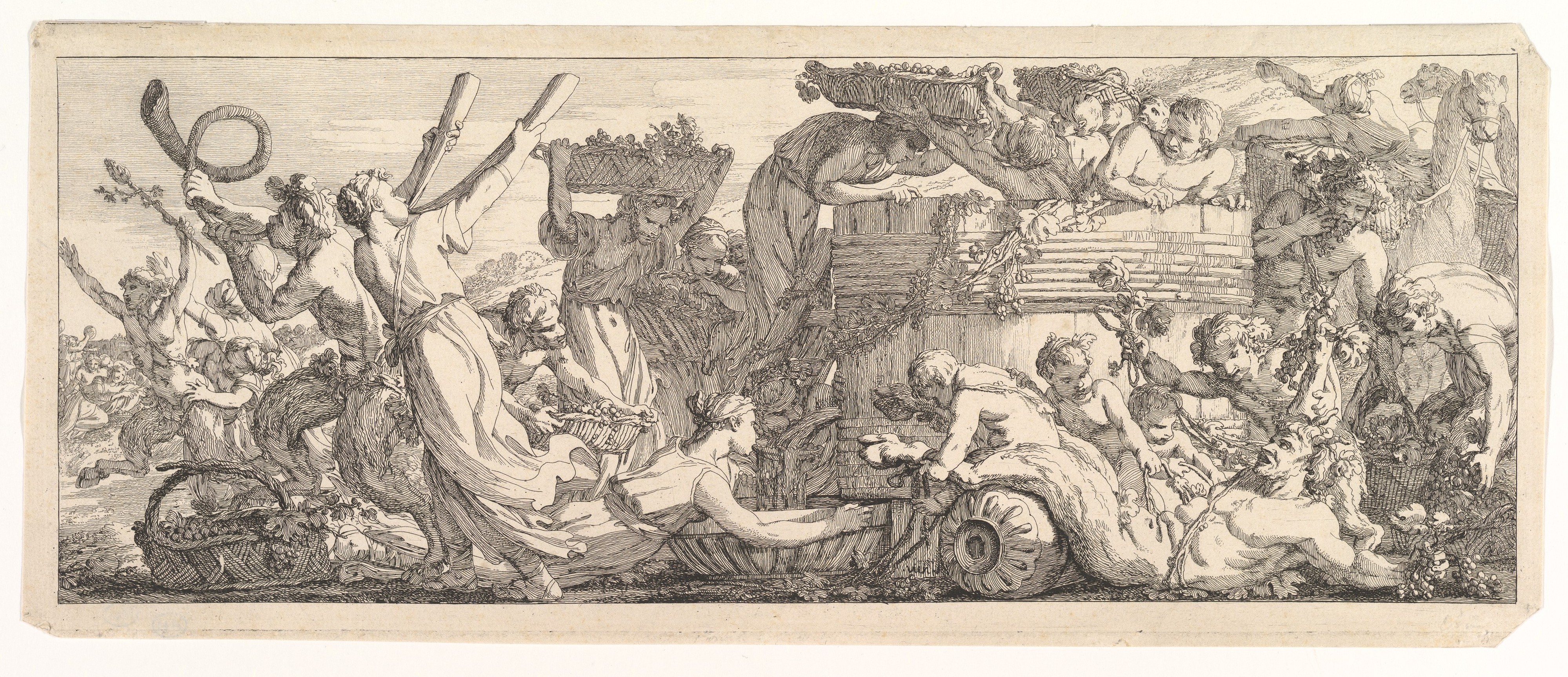
Historic illustration: Joseph Marie Vien, The Arrival of the Wine Vat, circa 1755 — etching, The Metropolitan Museum of Art, public domain.
A crisp green apple, the fragrance of acacia, a tingling sip: some sparkling wines keep the grape's character at the forefront. The Martinotti method, also called Charmat, creates the bubbles in a closed tank capable of retaining pressure: an autoclave.
An Italian invention, a French development
In 1895, the Italian oenologist Federico Martinotti patented a system for sparkling fermentation in tanks. His idea allowed wine to be made in pressurised vessels rather than bottle by bottle. In the early 20th century, the Frenchman Eugène Charmat improved the equipment and made the process easier to use on a large scale. Today, both names identify this family of tank-based winemaking.
How the bubbles form
For our Proseccos, the grapes first become a still wine. The base wine then receives the yeasts and sugars needed for a second fermentation in an autoclave. The yeasts turn sugar into alcohol and carbon dioxide; the closed tank retains the gas, which dissolves in the wine. Temperature is controlled, then the wine is filtered and bottled under pressure to preserve its sparkle.
This approach favours a fresh, direct expression of fruit and flowers. In the Proseccos on our list, the bubbles accompany the aromas of Glera; the wine retains a lively, clean and fragrant feel.
Sweet Asti: an essential distinction
Our Asti DOCG from Gancia uses the Martinotti method, with one particular feature: it begins with chilled must from Moscato grapes. Fermentation of the juice produces both alcohol and bubbles. It is stopped by cooling, then the yeasts are removed through centrifugation or filtration. Some of the grape's natural sugar therefore remains in the wine. For this sweet Asti, sparkling fermentation forms part of that fermentation; it does not follow the same two-fermentation route as our Proseccos.
The difference from the traditional method
With Martinotti, sparkling fermentation takes place in a tank. In the traditional method, it takes place in each bottle, followed by ageing on the yeasts. Our tank-made wines mainly highlight fruit and fragrance; our traditional-method wines also develop nuances of brioche and bread, and a more enveloping texture. The grape, ageing duration and producer's choices then shape each cuvée.
The tank-made wines on our list
Asti DOCG — Gancia. Moscato Bianco di Canelli; sweetness, acacia and wisteria flowers, sage and honey. We offer it by the bottle and by the glass as an aperitif.
Organic Diamante Prosecco DOC Extra Brut — 47 Anno Domini. A very dry profile, incisive freshness, green apple and floral notes.
Organic Diamante Prosecco DOC Extra Dry — 47 Anno Domini. Fruity and floral aromas, a fresh palate and more noticeable roundness than the Extra Brut.
Organic Diamante Prosecco Rosé DOC Extra Dry — 47 Anno Domini. Sparkling fermentation in an autoclave for a fresh rosé with fruity and floral nuances.
Organic Concerto Lambrusco Rosso Secco — Medici Ermete. This frizzante red made from Lambrusco Salamino ferments in a stainless-steel tank. Dry and fresh, it expresses strawberry, raspberry and cherry, with a rounded palate and lively sparkle.
Federico Martinotti: the man behind Italy's bubbles →
Prosecco: from imperial courts to our table →
Asti: the story behind the bubbles →
