Emil Christian Hansen, from house painter to brewing scientist
From apprentice painter in Ribe to researcher at Carlsberg. In 1883, a culture grown from one yeast cell changed how brewers worked.
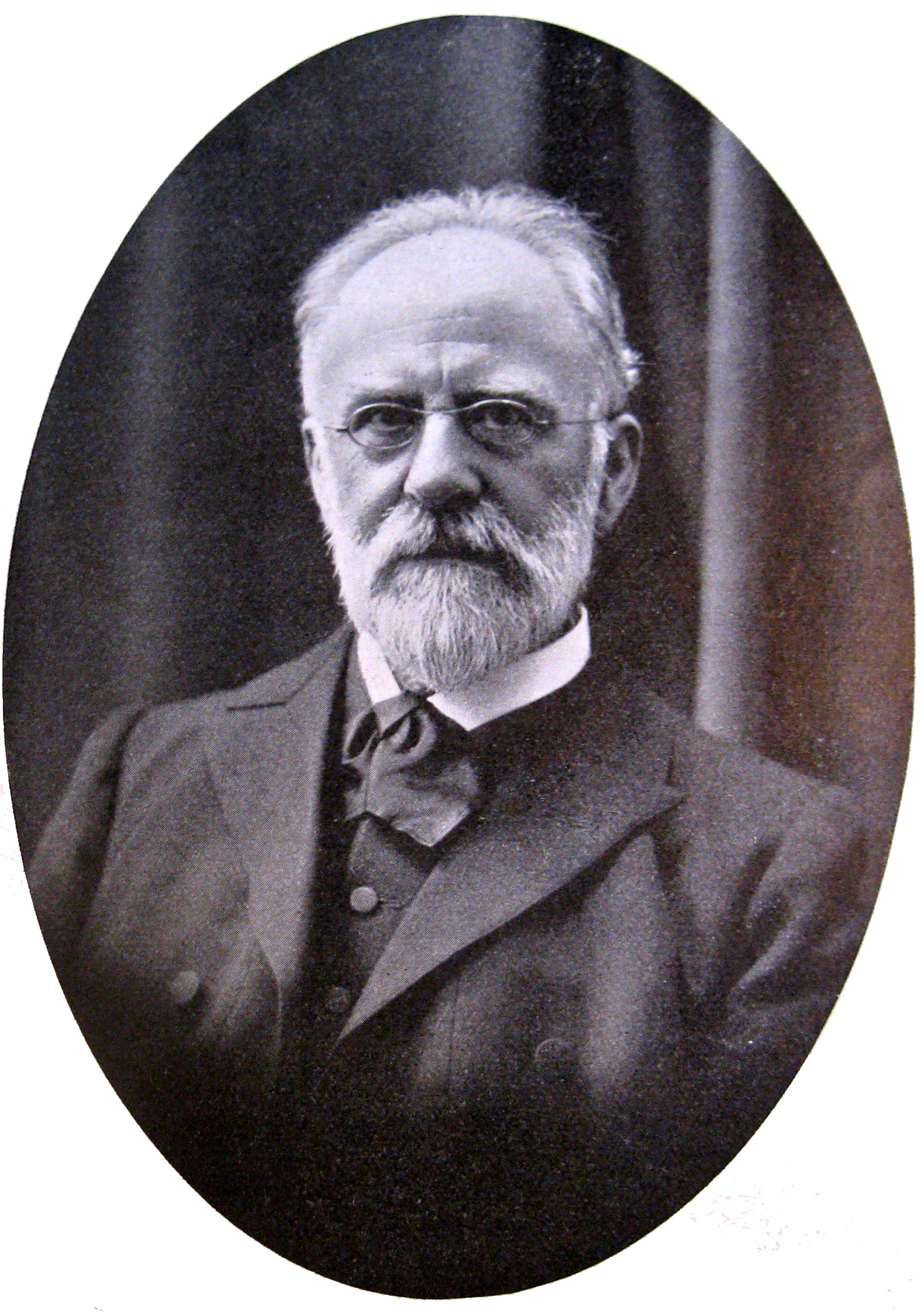
Emil Christian Hansen, portrait published in Illustreret Tidende in September 1909.
Illustreret Tidende · View the document · Public domain
Emil Christian Hansen (1842–1909) grew up in a family of modest means in Ribe, Denmark. He trained as a house painter and paid his way through further studies by tutoring, drawing and doing office work. In 1879, he took charge of the physiology department at the Carlsberg Laboratory in Copenhagen. Four years later, he faced the challenge of taking an experiment from the laboratory bench to the brewery vat.
What a brewer could lose in a single vat
Brewers often reused some of the yeast from an earlier batch. It restarted fermentation but could also carry unwanted yeasts from one vat to the next. On 6 September 1883, J. C. Jacobsen wrote to Hansen about a reported defect in his beer. He wanted to examine the samples and look up the brewing dates of the affected batches in the records.
Hansen showed that certain wild yeasts could spoil the flavour of beer. He diluted his samples to distribute the cells across small flasks, then grew cultures starting from a single cell. The selected strain, called Unterhefe Nr. 1, went into production at Carlsberg on 12 November 1883. Brewers now had a way to start with a known strain and obtain more consistent fermentation.
The yeast travels and the questions follow
In a letter to Franz Fasbender in Vienna in May 1884, Jacobsen says he had already sent samples to Danish brewers and to his former teacher Gabriel Sedlmayr at the Spaten brewery in Munich. In November, brewer Walter Arrol wrote from Glasgow to ask what size flask would grow enough yeast to ferment 80 to 100 barrels of wort at a time. His question shows how much work lies between a successful experiment and a method other brewers can use.
How it connects to the Carlsberg on our menu
At La Corte Segreta, Carlsberg 0.0 offers a way into this chapter of the brewery’s history. Hansen’s legacy is the ability to choose a yeast strain and cultivate it systematically to control fermentation.
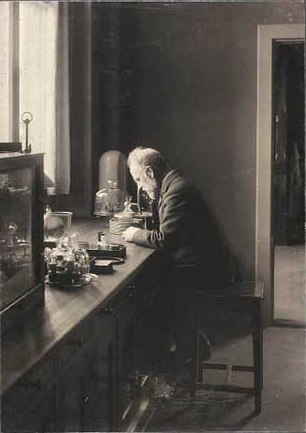
Emil Christian Hansen in the laboratory, before 1909. Photograph by Frederik Riise, Royal Danish Library.
Frederik Riise · Royal Danish Library · View the document · Public domain
Also in our archives
Carlsberg · Why is there a crown on the label? →
Sources
Dansk Biografisk Leksikon · Emil Chr. Hansen
Carlsberg Foundation · Emil Christian Hansen
Carlsberg Foundation · Emil Chr. Hansens arkiv
Emil Christian Hansen · Untersuchungen aus der Praxis der Gärungsindustrie
J. C. Jacobsen → Emil Christian Hansen, 6 September 1883
J. C. Jacobsen → Franz Fasbender, 20 May 1884