Podere Le Scuderie — Sorraia in the landscape of Bolgheri
A young Frollani family winery on the Tuscan coast, where Cabernet, Merlot and Syrah have found their place.
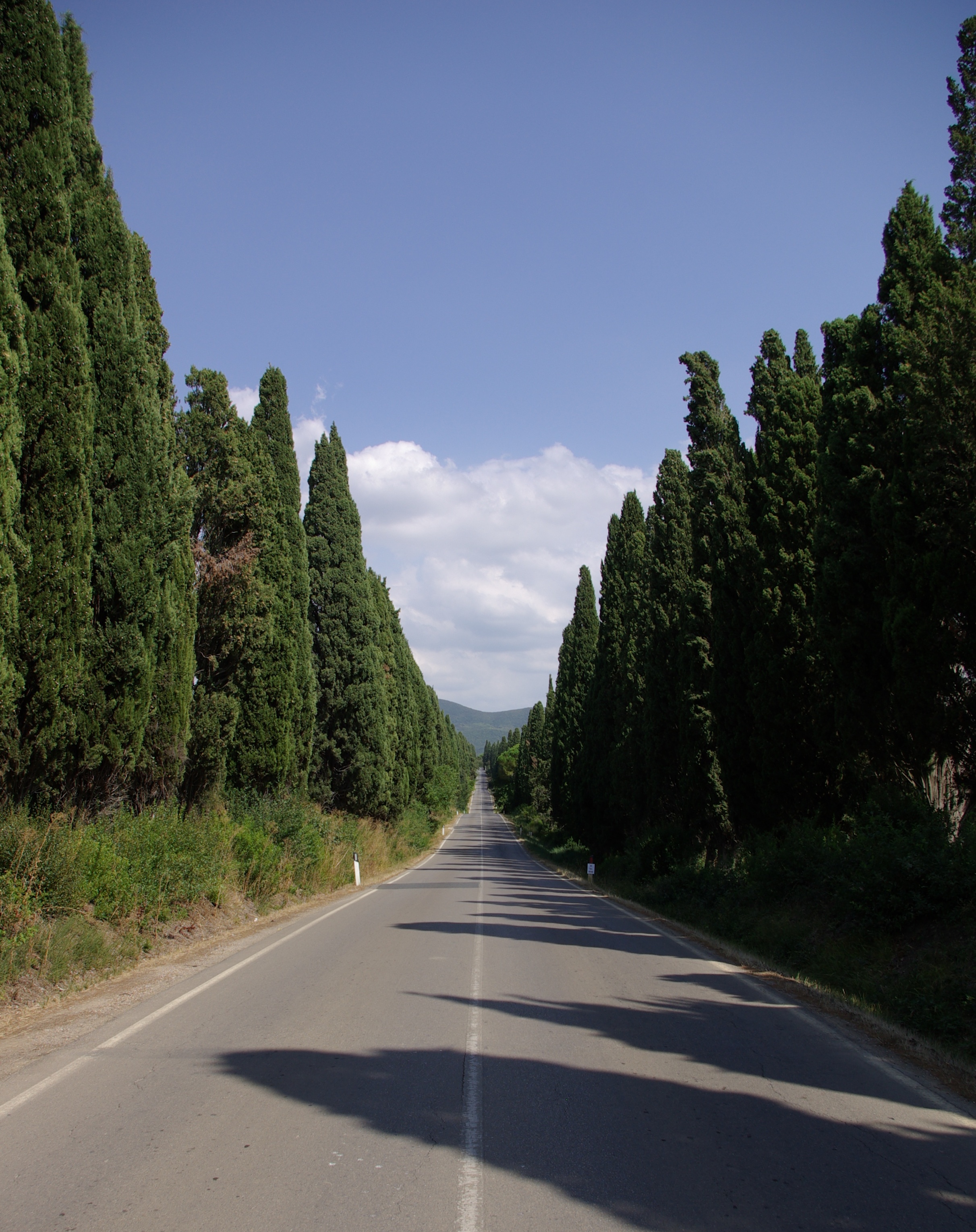
Viale dei Cipressi in Bolgheri, in the municipality of Castagneto Carducci. A regional landscape on the Tuscan coast. — Janericloebe · Original image · Public domain — released by the rights holder
Bolgheri: a coastal side of Tuscany
Podere Le Scuderie takes us to Castagneto Carducci, in the province of Livorno. Here, Bolgheri is a village, a wine-growing area and the name of an appellation. Wooded hills descend towards a plain of vineyards facing the Tyrrhenian Sea. This landscape gives a very precise setting to Sorraia, the producer’s red wine served at La Corte Segreta.
The young winery is run by Giuliano and Gessica Frollani, a brother and sister from a local farming family. Its name evokes the scuderie, the horse-breeding establishments and stables that belong to local history. Before being planted with vines, the land associated with the project had been used to grow fruit and vegetables until around the late 1980s.
A recent winery in an appellation that has changed
Bolgheri’s development helps explain this choice. Established in 1983, the appellation initially protected whites and rosés. In 1994, its rules admitted reds made notably from Cabernet and Merlot. The success of these grapes on the coast had prepared the way for this change. Le Scuderie belongs to this contemporary chapter of Tuscan wine-growing history.
Sorraia Bolgheri Rosso bears the DOC designation, which governs its origin and production conditions. The appellation’s territory corresponds to the municipality of Castagneto Carducci, excluding the coastal strip west of the Via Aurelia. Reading Bolgheri on the label therefore locates the wine more precisely than the word Tuscany alone.
Vines and a blend
For Sorraia Rosso, the documented plantings bring together Cabernet Sauvignon, Merlot and Syrah. The plantings described in the technical presentation date from between 2002 and 2013, on stony clay soils with south and south-west exposures. Winemaker Emiliano Falsini supports the work in the cellar. This combination of grapes and growing conditions is part of the wine’s personality.
The nearby sea influences Bolgheri as a whole: breezes ventilate the vines and moderate temperatures. Its soils are highly varied, shaped by both the area’s marine history and deposits carried by watercourses. This diversity of terrain makes it possible for several grapes to interact within a relatively compact area.
Sorraia: a family of wines
The Rosso ferments in temperature-controlled steel tanks, with around twenty days of maceration. Oak ageing precedes a rest in the bottle. The range also includes a Bolgheri Rosso Superiore, a Vermentino and a rosé. The similar names invite a careful reading of the designation: each wine expresses particular choices of grapes and winemaking.

Podere Le Scuderie: documented regions, locations and grape varieties. Mapping: ISTAT boundaries, distributed by openpolis / geojson-italy, CC BY 4.0. Projection and colours adapted; a regional location map, not a cadastral map. Map boundaries · CC BY 4.0
Cabernet Sauvignon: structure, blackcurrant and an unexpected relationship →
Merlot: an inviting texture and an origin long shrouded in mystery →
Sassicaia: the dream of Bolgheri →